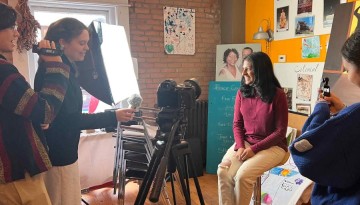
For her work in developing and teaching nutrition and food justice curricula to adolescents in New York City, Hannah Rudt ’23 has won the 2023 National Student Employee of the Year award – the first Cornellian to ever receive this honor.
A new study led by Weill Cornell Medicine and NewYork-Presbyterian investigators has found that the risk of long COVID and its symptoms present very differently across diverse populations and suggests that further investigation is needed to accurately define the disease and improve diagnosis and treatment.
Patients with HIV had similar treatment outcomes to patients without HIV when treated for mpox with an antiviral drug called tecovirimat, according to a new study.
Nearly 90% of patients with an aggressive subtype of non-Hodgkin lymphoma had their cancer go into remission in a small phase 2 clinical trial testing a treatment aimed at making chemotherapy more effective, according to Weill Cornell Medicine and NewYork-Presbyterian investigators.
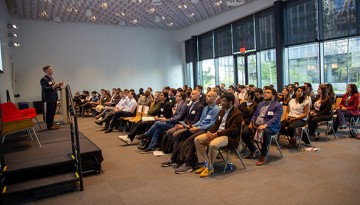
Big Red Ventures (BRV), Cornell’s early-stage venture capital fund, showcased the student-run portfolio and highlighted 2022-23 investments during the Annual Meeting on April 20 at Cornell Tech.
The first-year class of students in the Milstein Program in Technology and Humanity are finishing up their community projects and looking forward to their summer in New York City.
The Yang-Tan WorkABILITY Incubator, recently launched through the ILR School’s Center for Applied Research on Work, will support innovative applied research projects and collaborations.