Using a biomaterials-based organoid, a multi-institution team led by Matt DeLisa of Cornell Engineering was able to assess the strength of the immune response to a glycoengineered vaccine in days, instead of months.
People with autism spectrum disorder can be classified into four distinct subtypes based on their brain activity and behavior, according to a study from Weill Cornell Medicine investigators.
A team has identified an antibody that appears to block infection by all dominant variants of the virus that causes COVID-19, including omicron. Their discovery could lead to more potent vaccines and new antibody-based treatments.
Ocular drift, a very subtle and seemingly random type of eye movement, can be influenced by prior knowledge of the expected visual target, suggesting a surprising level of cognitive control over the eyes, according to a study led by Weill Cornell Medicine neuroscientists.
This summer, students can explore business management in the center of global business by taking The Business World in New York City, offered by Cornell’s School of Continuing Education and Summer Sessions. This popular three-credit foundation course runs May 30 through June 16, 2023, on the Cornell University ILR NYC Campus on Lexington Avenue.
White blood cells called neutrophils have an unappreciated role in eradicating solid tumors, according to a surprise discovery from a team led by Weill Cornell Medicine scientists.
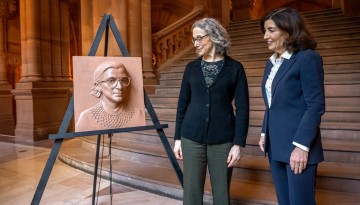
For the first time in 125 years, the face of a celebrated New Yorker – Ruth Bader Ginsburg – will be permanently commemorated at the New York State Capitol’s Great Western Staircase.
Prelaw in New York City features a four-credit course, "Introduction to the American Legal System," taught using the Socratic method used at most U.S. law schools and some selective internships.