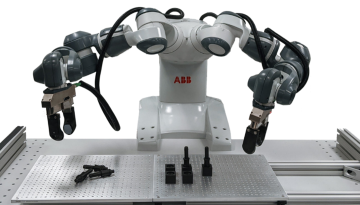
When we think of having our own handy multi-purpose robots, we tend to picture something out of Star Wars or The Jetsons — but the useful technology of the ‘future’ may not be as far off as we think. Maria Bauza Villalonga, PhD student at MIT, hosted a Seminar @ Cornell Tech to show how robots can become our best allies.
Investigators from Weill Cornell Medicine and Memorial Sloan Kettering Cancer Center have discovered how a drug for multiple sclerosis interacts with its targets, a finding that may pave the way for better treatments.
Anesthesiology prices jump significantly after medical facilities contract with corporate physician management companies – especially those backed by private equity firms – and threaten to hike patient costs, according to new research.
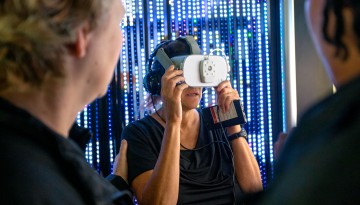
Powering augmented and virtual reality technologies to tackle real-world problems is the focus of a two-year, $1.8 million grant from Meta and Spark AR to Cornell Bowers CIS and Cornell Tech’s XR Collaboratory.
A Cornell Tech clinic has created a new approach to helping survivors of domestic abuse stop assailants from hacking into their devices and social media to surveil and harass them.
A patient living with HIV who received a blood stem cell transplant for high-risk acute myeloid leukemia has been free of the virus for 14 months after stopping HIV antiretroviral drug treatment, suggesting a cure, according to the Weill Cornell Medicine and New York-Presbyterian physician-scientists who performed the transplant and managed her care.
Weill Cornell Medicine has been awarded a $9.8 million grant from the National Institutes of Health to lead a consortium of health care institutions that are analyzing nationwide health data in an effort to unravel the complexities of long COVID.
A specific group of fungi residing in the intestines can protect against intestinal injury and influence social behavior, according to new preclinical research by scientists at Weill Cornell Medicine.