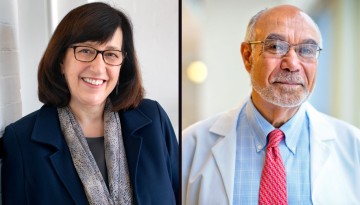
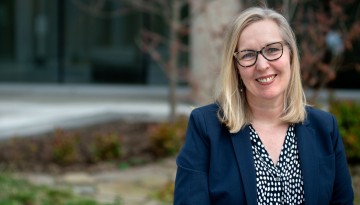
President Martha E. Pollack and Dr. Jean William Pape, M.D. ’75, professor in clinical medicine at Weill Cornell Medicine, have been elected to the American Academy of Arts and Sciences.
Cornell Tech researchers have developed a mixed-reality driving simulator system that could lower the cost of testing vehicle systems and interfaces, such as the turn signal and dashboard.
Adult vaccination rates and social determinants of health – the social and economic conditions in which families live and work – have played an important role in children’s mental health during the pandemic, according to a new study led by Weill Cornell Medicine investigators.
Abnormalities in a type of brain cell called astrocytes may play a pivotal role in causing some behavioral symptoms of autism spectrum disorders, according to a preclinical study by Weill Cornell Medicine investigators.
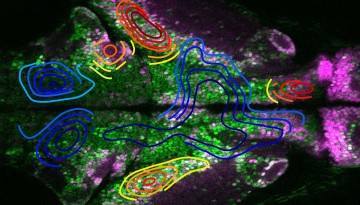
New evidence from a zebrafish model of epilepsy may help resolve a debate into how seizures originate, according to Weill Cornell Medicine and NewYork-Presbyterian investigators. The findings may also be useful in the discovery and development of future epilepsy drugs.
The center, with more than 120 faculty members, builds on the multidisciplinary nature of research into the immune system, with links between infection biology, vaccine development, genetics, genomics, malignancy and biomedical engineering.
New cancer cell research opens a new avenue for understanding how tumors spread to other tissues via metastasis, and hints at novel ways to block the spread of cancer by targeting the process.
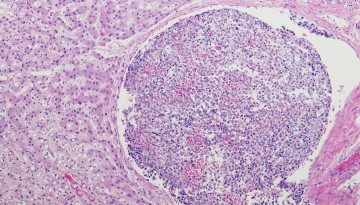
Among participants who had hepatitis C and who injected drugs, those treated at a non-stigmatizing “accessible care” treatment center co-located with a syringe service program were nearly three times more likely to be cured, according to new research.
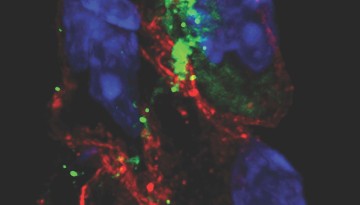
The SARS-CoV-2 virus can infect specialized pacemaker cells that maintain the heart’s rhythmic beat, setting off a self-destruction process within the cells, according to a preclinical study co-led by researchers at Weill Cornell Medicine, NewYork-Presbyterian and NYU Grossman School of Medicine.