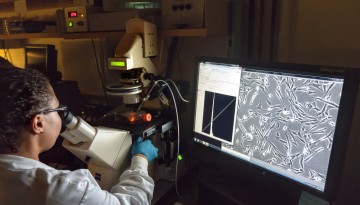
Susan Daniel and Gary Whittaker discuss their collaborations and others across Cornell’s campuses that are working to better understand the COVID-19 virus.
Cornell Atkinson has awarded seven Academic Venture Fund seed grants, totaling $1.1 million, for projects that engage faculty from eight Cornell colleges and 16 academic departments.
Provost Michael Kotlikoff and Vice President And Chief Human Resources Officer Mary Opperman said the Ithaca and Geneva campuses will be cleared for Phase 4 reopening June 26.
President Martha E. Pollack announced the June 22 release of reports by the Teaching Reactivation Options Committee and the Preparation for Online Teaching Committee.
The Cornell University Glee Club and Chorus perform on a new CD of works composed by Roberto Sierra, the Old Dominion Foundation Professor in the Humanities.
President Martha E. Pollack and Vice President and Chief Human Resources Officer Mary Opperman announced that June 19 will be a holiday for faculty and staff on the Ithaca and Cornell Tech campuses. Juneteenth commemorates the ending of slavery in the United States.
Cornell undergraduates have formed a broad coalition of student organizations to amplify black voices on campus, and promote activism and education to fight explicit and implicit racism.