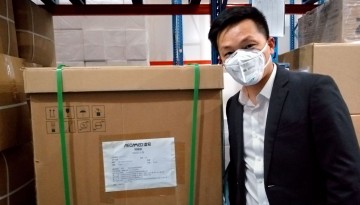
A determined group of Cornellians in and with connections to China has been helping to provide crucial equipment and supplies for medical professionals at Weill Cornell Medicine in New York City and Cayuga Medical Center in Ithaca.
Collaborating across disparate disciplines to tackle the grand challenges facing humanity is intrinsic to Cornell’s unique brand of research innovation.
In the 1800s, Americans were targeted with advertisements for what were often considered “cure-all” medicines, presented in colorful trade cards – now part of a Weill Cornell Medicine collection.
A class of immune cells push themselves into an inflammatory state by producing large quantities of a serotonin-making enzyme, a finding that could inform future treatments for asthma and other allergic disorders.
Planning committees are assessing options for reopening Cornell's campuses amid hopeful signs that the spread of COVID-19 is slowing, university leaders said April 29 during a virtual staff forum hosted by the Employee Assembly.
Cornell President Martha E. Pollack and Provost Michael I. Kotlikoff are playing a vital role in helping New York state plan for reopening safely as the COVID-19 pandemic eases.
A new tool developed by a Cornell Tech team can unobtrusively monitor electronic cigarette inhalations, yielding important information for research into vaping.