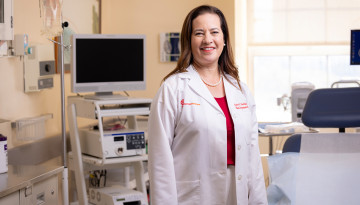
Dr. Gary Koretzky ’78 has been appointed vice provost for research for Cornell’s Ithaca, Cornell Tech and AgriTech campuses, effective Dec. 15, 2025. He has been serving in an interim role since February 2025.
Though pelvic floor disorders happen when the muscles and tissues that support the bladder, bowel and uterus weaken or don’t work properly, and affect one-third of all women, they are not a normal part of aging.
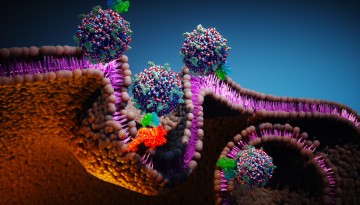
A class of ultrasmall fluorescent core-shell silica nanoparticles developed at Cornell is showing an unexpected ability to rally the immune system against melanoma and dramatically improve the effectiveness of cancer immunotherapy.
Gut microbes may play a key role in training a mother’s immune system to adapt to the developing fetus during pregnancy, according to a preclinical study by Weill Cornell Medicine investigators.
A new approach, called WildCAT3D, is making it easier to visualize lifelike 3D environments from everyday photos already shared online, opening new possibilities in industries such as gaming, virtual tourism and cultural preservation.
Researchers at Weill Cornell Medicine recently discovered that low levels of folate, a B vitamin essential for cell growth, can trigger specific genetic changes found in several human cancers, including lung tumors.