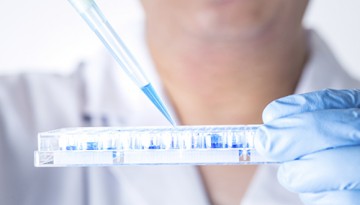
A $5 million gift establishes a new initiative that will use predictive tools to enhance Weill Cornell Medicine's capability to diagnose and treat a variety of illnesses to improve outcomes for patients.
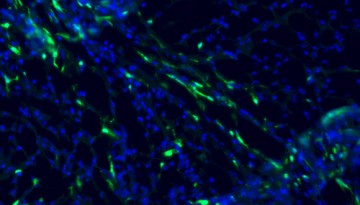
Two studies from Weill Cornell Medicine found brain tumors recruit immune cells derived from bone marrow to transform what began as benign masses into deadly malignancies.
"A Tale of Three Cities: Reading Turin, Trieste and Rome," a talk by Kora von Wittelsbach, will be held at the Center for Jewish History, 15 W. 16th St. in New York City.
Six undergraduates spent spring break in Harlem building a sensory garden for children through Alternative Breaks, which promotes service learning through direct engagement with various communities.
A virtual reality project, co-created by an audio producer at the Cornell Lab of Ornithology, replaces the sounds of today's urban Manhattan with scientifically accurate audio representations of the island in 1609.
A new Cornell Presidential Postdoctoral Fellows Program encompassing all research disciplines at the university will appoint its first six fellows during the 2017-2018 academic year.
ILR School Professor Francine D. Blau '66 will accept the school's 2017 Judge William B. Groat Award April 20 for achievement and service to the school in New York City.