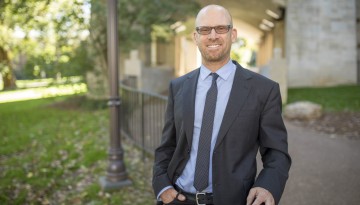
ILR student Patrick Mehler, also a member of Ithaca Common Council, wants to buy a vowel – and add a few consonants – when he spins for a chance to win money tonight on “Wheel of Fortune.”
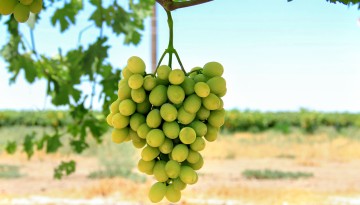
Two newly released grape varieties, developed collaboratively between Cornell AgriTech and Sun World International, a global fruit genetics and licensing company, offer new flavors for consumers and better growing characteristics for farmers.
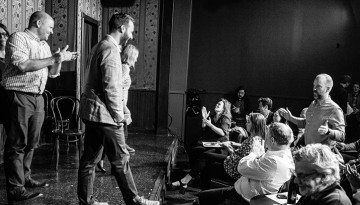
To help students develop networking and interviewing skills, Cornell Career Services and Cornell University Program Board will host Second City Works improvisors for a series of programs and exercises on March 25 and 26.
The March 9 event included both online and in-person activities, centered around 11 TED-style talks given by faculty members in the College of Arts and Sciences.
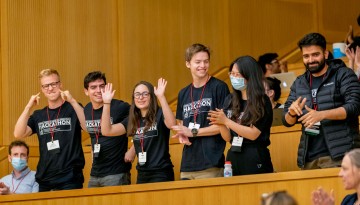
Students from 28 fields across six different schools gathered at the fourth annual Digital Agriculture Hackathon, March 11-13, to find solutions to global food system issues while competing for cash prizes.
Drawing inspiration from 19th century glass artists, David Nasca's new installation “Model Organisms” in the Mann Library uses ocean life to create metaphors relating to humanity's present and imagined futures.
Students are invited to enroll now for Cornell’s Summer Session where they can earn up to 15 credits. Courses are offered online, on campus and around the world in three-, six- and eight-week sessions between May 31 and August 2, 2022.