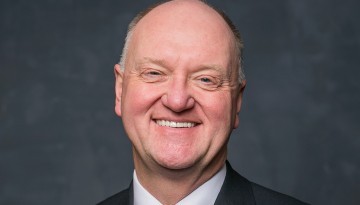
Andrew Karolyi, acting dean of the Cornell SC Johnson College of Business since Kevin F. Hallock stepped down March 4, will serve as dean of the college for the remainder of Hallock’s term, Provost Michael Kotlikoff has announced.
The Bronfenbrenner Center for Translational Research will host a virtual conversation April 19 with University of Chicago sociologist Reuben Miller author of “Halfway Home: Race, Punishment, and the Afterlife of Mass Incarceration.”
Cornell’s admitted class of 2025 – a class that applied to college during an unprecedented year interrupted by pandemic-related closures and quarantines – is an impressive one and its composition has set new levels of diversity for the university.
President Martha E. Pollack and Kavita Bala, dean of the Cornell Ann S. Bowers College of Computing and Information Science, talked about the future of the college at Cornell Silicon Valley 21, held virtually March 30.
In a virtual conference on April 15–16, scholars, activists and practitioners from around the world will meet to explore plantations’ deep-rooted legacies, including racial inequality, dispossession and climate change.
In the 2022 fiscal year, the university will continue to meet full financial need for all undergraduate students – regardless of the economic uncertainties caused by the pandemic.
The university plans to host in-person Commencement the weekend of May 29-30 with attendance limited to members of the Class of 2021, which includes graduating seniors, graduating graduate and professional students, and students who completed degrees in August or December 2020.
Representing Cornell’s four contract colleges, the recipients of the 2021 State University of New York Chancellor’s Award for Student Excellence will be recognized during a virtual ceremony April 14.
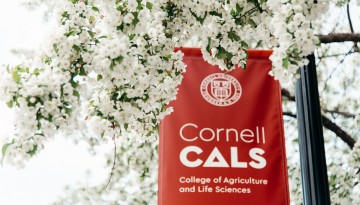
The College of Agriculture and Life Sciences (CALS) welcomes six new faculty members, advancing its commitment to pursuing purpose-driven science and improving the lives of people across New York state and around the world.