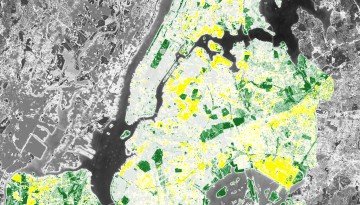
Tree Folio NYC creates a high-resolution “digital twin” of New York City’s urban canopy, simulating how local conditions influence shading that is important to mitigating climate change and heat island effects.
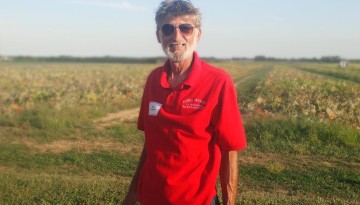
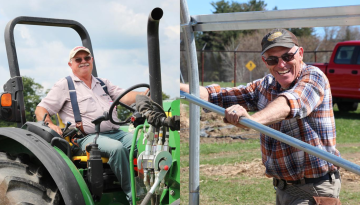
Rod Zeltmann, a field assistant at the Long Island Horticultural Research and Extension Center (LIHREC), celebrated 50 years of employment at Cornell in 2023. Colleagues describe him as reliable, dedicated, and multi-talented.
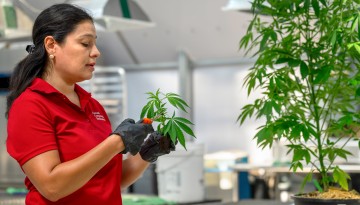
A new manual will provide guidelines for New York state growers of hemp – a crop with the potential to revitalize economies while revolutionizing industries from fiber to pharmaceuticals.
With funding from the Einhorn Center for Community Engagement, teams of Cornell faculty, staff and community partners are creating new community-engaged learning opportunities for undergraduates.
Cornell Agricultural Experiment Station farm managers Steve McKay and Paul Stachowski have retired after 38 and 32 years of service to the university, respectively.
The initiative is designed to improve standards of online privacy, safety and security, and to establish New York City as the epicenter of cybersecurity research.
Researchers are hoping a fly no larger than a grain of rice and a predatory beetle may work together to combat an invasive pest that is devastating hemlocks in Fall Creek and throughout eastern North America.
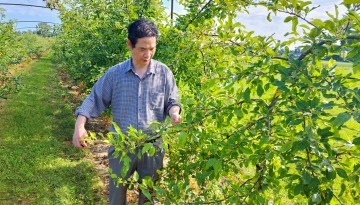
Plant geneticists have identified a mutation in a gene that causes the “weeping” architecture – branches growing downwards – in apple trees, a finding that could improve orchard fruit production.
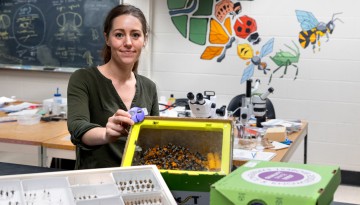
A Cornell study that revealed commercial eastern common bumblebee hives pose a threat to their wild counterparts has led one major pollination company to quickly adapt the bumblebee hive boxes they ship to growers.