A new Cornell study finds that when small-scale farmers are trained in food safety protocols and develop a farm food safety plan, new markets open up to them, leading to an overall gain in revenue.
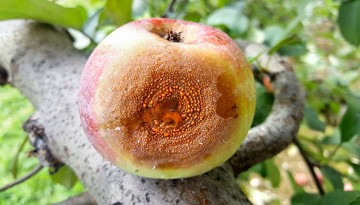
In a study of New York state apple orchards, Cornell plant pathologists have identified a new fungal pathogen that causes bitter rot disease in apples.
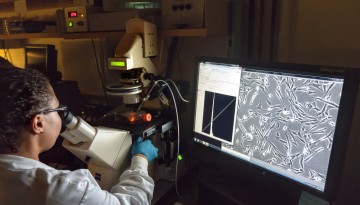
Susan Daniel and Gary Whittaker discuss their collaborations and others across Cornell’s campuses that are working to better understand the COVID-19 virus.
Cornell Atkinson has awarded seven Academic Venture Fund seed grants, totaling $1.1 million, for projects that engage faculty from eight Cornell colleges and 16 academic departments.
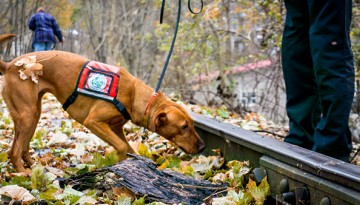
A Cornell-led team of researchers field-tested 14 active ingredients in insecticides, applied in a variety of methods, to understand the best treatment options against the Allium leafminer, a growing threat to onions, garlic and leeks.
For their work addressing causes and consequences of demographic change in rural America, a team of Cornell sociologists and other rural scholars have earned the Excellence in Multistate Research Award.
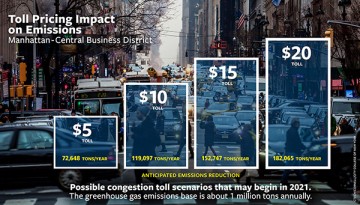
Cornell and the City College of New York research shows that by creating steep tolls for cars to enter Manhattan, traffic congestion and greenhouse gas emissions could be reduced.
Cornell Law School’s First Amendment Clinic and co-counsel Greenberg Traurig, LLP scored a victory last Thursday for citizen journalist Jim Meaney and his blog “The Geneva Believer.”
Cornell data scientists are developing models and mathematical techniques to address the world’s most vexing problems, from public health crises to climate change.