Cornell faculty are reaching across disciplines to tackle society’s most complex challenges and to make breakthrough discoveries. These radical collaborations—collisions of thoughts and perspectives from vastly different fields—lead to unexpected and unconventional solutions and deepen our thinking.

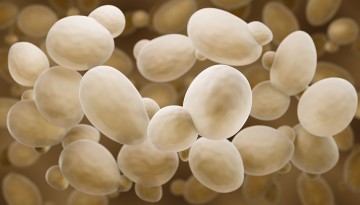
Psychedelics excite cells in hippocampus to reduce anxiety

A classic psychedelic was found to activate a cell type in the brain of mice and rats that silences other neighboring neurons, providing insight into how such drugs reduce anxiety. 

CCE appoints Climate and Sustainable Energy Critical Issue Lead

Cornell Cooperative Extension has named David Kay the critical issue lead for extension programming in the areas of climate change and sustainable energy, effective September 1.

Around Cornell

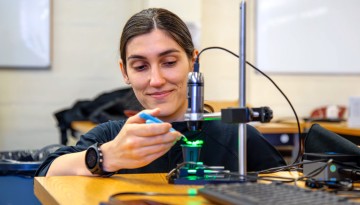
From lab to patent: Undergrad creates smart syringe for bioprinting

A smart sensor that attaches to the tip of a syringe can measure, in real time, the concentration and viability of the cells that pass through it – a potential breakthrough for biomedical 3D printing and cell therapy.

Microscale kirigami robot folds into 3D shapes and crawls

Researchers created a robot less than 1 millimeter in size that is printed as a 2D hexagonal “metasheet” but, with a jolt of electricity, morphs into preprogrammed 3D shapes and crawls.

Crisis communication course provides new tools to state health officials

A two-day training program for the New York State Department of Homeland Security and Emergency Services helps local health officials and first responders convey key messages in a crisis.

Diagnostic tool identifies puzzling inflammatory diseases in kids

A Cornell-led collaboration developed machine-learning models that use cell-free molecular RNA to diagnose pediatric inflammatory conditions that are difficult to differentiate. 

Biohybrid robots controlled by electrical impulses — in mushrooms

Cornell researchers discovered a new way of controlling biohybrid robots that can react to their environment better than their purely synthetic counterparts: harnessing fungal mycelia’s innate electrical signals.

Hubs grant launches AI collaboration, new proposals due Oct. 4

What are the options for limiting harm as AI use grows? This is one of the questions a network of international colleagues are tackling in a research collaboration launched with a 2022 Joint Research Seed Grant from Global Cornell’s Global Hubs initiative. This year’s cycle of Global Hubs seed grants recently opened.

Around Cornell

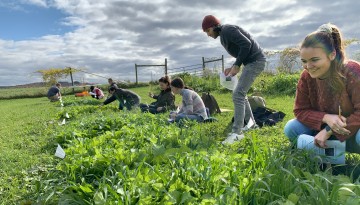
Campus grasslands grow environmental solutions

Projects across Cornell are exploring how the university's grasslands – from hayfields to campus lawns – can protect birds, encourage biodiversity and sequester carbon to fight climate change.