Mental health problems can be a barrier for people seeking employment, but new research from the Cornell SC Johnson College of Business shows that remote work options can increase participation in the labor market.
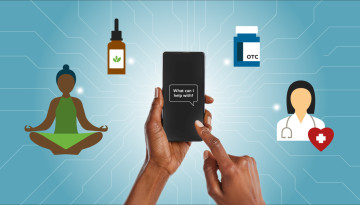
Cornell researchers are recommending new guidelines for developing safe and responsible large language model-based mental well-being apps by consulting relevant experts and reviewing existing state and federal regulations.
Employees who are impressed by vague corporate-speak like “synergistic leadership,” or “growth-hacking paradigms” may struggle with practical decision-making, a new Cornell study into “corporate BS” reveals.
The Cornell Center for Social Sciences has selected 10 faculty members as 2026–27 Faculty Fellows, providing course release and funding to support interdisciplinary social science research with real-world impact.
A Cornell-led collaboration used high-resolution 3D imaging to detect, for the first time, the atomic-scale defects in computer chips that can sabotage their performance.
The Assessing and Imagining the Impact of Generative AI on Science Symposium, March 3-5, will feature experts from across academia and industry engaging in discussions on the use and implications of generative AI.
New York state farmers with solar leases say they’ll use the added revenue to invest in their farms, with many stating they don't plan to change their agricultural practices at all.
Researchers have found that quantum systems in a frozen state can be stabilized long enough to be a useful strategy for preserving information before it disappears.