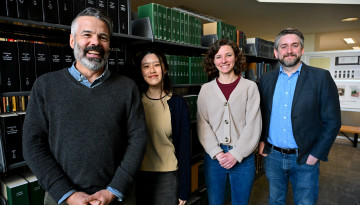
Gary Koretzky ’78 named VP for research

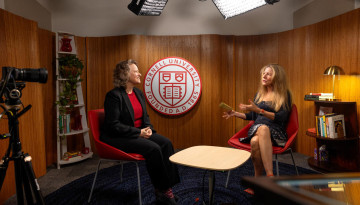
Dr. Gary Koretzky ’78 has been appointed vice provost for research for Cornell’s Ithaca, Cornell Tech and AgriTech campuses, effective Dec. 15, 2025. He has been serving in an interim role since February 2025.

The people behind the telescope: Supporting science at the edge of the universe

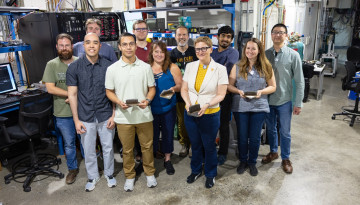
Behind a world-leading telescope bound for Chile is a team of engineers, machinists, electronics specialists and riggers at Cornell. Meet the specialized staff whose expertise is helping push cosmology to new frontiers.

Around Cornell

Research matters: How folate deficiency may alter genes to promote cancer

Researchers at Weill Cornell Medicine recently discovered that low levels of folate, a B vitamin essential for cell growth, can trigger specific genetic changes found in several human cancers, including lung tumors.

2025 Year in Review

Cornell’s impact was felt near and far, from the lacrosse fields to research labs and beyond in a turbulent 2025.

Research Matters: Personalizing pancreatic cancer treatment

Dr. Despina Siolas, assistant professor of medicine at Weill Cornell Medicine and an oncologist at NewYork-Presbyterian/Weill Cornell Medical Center, is working on personalizing treatment for pancreatic cancer, which is often diagnosed too late.

How small satellites can help the US win the space race

Researchers are using 3D printing to custom build high-efficiency, low-cost electric rockets that, combined with novel propellants, will keep small satellites in low Earth orbit.

Research at Risk: Rooting out treatment-resistant prostate cancer

A federal stop-work order has threatened the progress a Weill Cornell Medicine researcher has made in understanding a lethal and treatment-resistant form of prostate cancer.

Research at risk: Cultural fluency and critical language expertise

The federal government ended a program that has funded Cornell's Southeast Asia Program and South Asia Program for decades.

Research at Risk: Nanoscale facility in funding limbo

The Cornell NanoScale Science and Technology Facility has enabled scientists and engineers from academia and industry to conduct groundbreaking research, thanks to continuous support from the National Science Foundation. But that funding is now at risk.