More young unmarried Americans are living together than ever before, but not much is known about why couples decide to take on this romantic rite of passage. A new book by demographer Sharon Sassler sets out to fill these gaps.
A new Cornell study finds the darker a white man's skin is, the more likely he is to be arrested, compared to lighter-skinned white men. In contrast, black men, no matter how dark or light their skin, get arrested at the same rate.
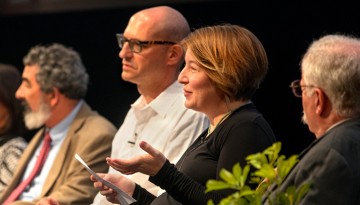
An academic symposium, “Universities and the Search for Truth,” held Aug. 24 in Bailey Hall, was part of the celebrations of Martha E. Pollack’s inauguration as Cornell’s 14th president.
Fourteen Cornell students and recent alumni are setting out this fall for destinations around the world, thanks to grants from the Fulbright U.S. Student Program.
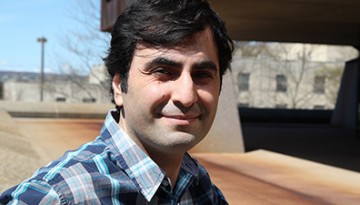
Cornell sponsored Turkish academics Azat Gündoğan, a sociologist, and his wife, historian Nilay Ozok-Gündoğan, when they were threatened by their government.
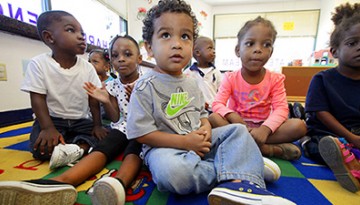
Cornell researchers are working with Head Start Centers and day schools in New York City on early intervention to promote development of spatial skills and language acquisition in preschoolers.
In a new opinion piece in a major publication, Morten Christiansen, professor of psychology, calls for a new era of integration in the language sciences, which has fragmented into many highly-specialized areas of study.
Fathers who have been incarcerated tend to avoid their kid's school - not because they don't care about their child's education, but because they're afraid of the school as a surveilling institution, says sociologist Anna Haskins.
Experiencing a range of positive emotions, from enthusiasm to amusement, is linked to lower levels of inflammation, says a new study by Anthony Ong. He and his team drew on approaches used to measure the biodiversity of ecosystems.