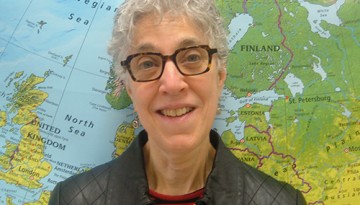
Elissa Sampson, visiting scholar and lecturer in the Jewish Studies Program, will be honored May 18 with a Lower East Side Community Hero Award in New York City.
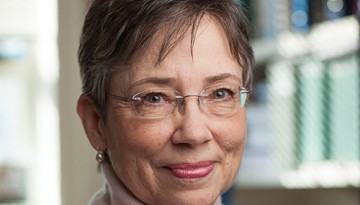
Kathleen M. Rasmussen, professor of nutritional sciences, has been recognized by the American Society for Nutrition with the Conrad A. Elvehjem Award for Public Service in Nutrition.
Oneka LaBennett's students in oral history and urban ethnography over spring break recorded the life stories of Caribbean immigrants living and working in a rapidly gentrifying part of Brooklyn.
More than 80 students unveiled their scholarly work at the 32nd annual Spring Research Forum hosted April 27 by the Cornell Undergraduate Research Board.
In the Auburn Correctional Facility's gray stone chapel, incarcerated students and prison staff waited alongside Cornell faculty and staff April 26, eager to hear the results of who won a debate between inmates and law students.
In an April 11 lecture, Stacey Langwick explored how concerns over toxicity shape public conversations about the forms of nourishment and modes of healing that make places livable.
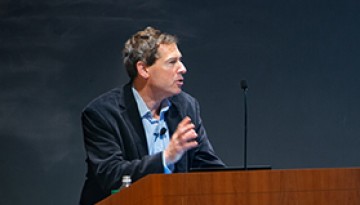
At Social Mobility in an Unequal World Conference April 20, Stanford's David Grusky's discussed absolute mobility rates: children who earn more than their parents did at the same age.
There's a simple way to reduce the opioid epidemic gripping the country: Make doctors check their patients’ previous prescriptions. The new research is by Colleen Carey, associate professor of policy analysis and management.