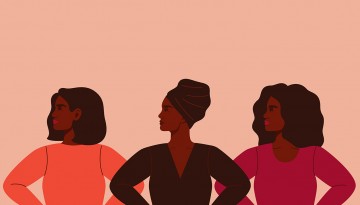
Black employees who engage in racial codeswitching are consistently perceived as more professional, by both Black and white individuals, than employees who do not codeswitch, according to new ILR research.
The endowed professorships will fund ground-breaking research in the areas of psychology and human development, fiber science and apparel design, and nutritional sciences.
ILR Associate Professor Vanessa Bohns says that consent has been a neglected topic in mainstream psychology. In an upcoming article, she argues now is the time to build a better psychological definition.
In a new book, “Movies on Our Minds: The Evolution of Cinematic Engagement,” psychology professor emeritus James Cutting explores the perceptual, cognitive and emotional reasons we enjoy popular films.
A study involving researchers from the College of Human Ecology and Weill Cornell Medicine estimates the incidence of elder mistreatment in New York state and advances understanding of key risk factors.
When it comes to increasing public support for policies and programs related to early childhood education, the target audience should determine the type of message used, according to Jeff Niederdeppe, professor of communication in CALS.
Lessons from suicide survivors – people who, despite the urge to die, find ways to cope and reasons to live – are seldom heard, but Cornell researchers and their colleagues have written one of the first studies to change that.
According to new research co-led by Jonathon Schuldt ’04, associate professor of communication, family values are a much stronger predictor of climate opinions and policy support than political views for U.S. Latinos.
Thanks to Cornell researchers and their colleagues, a dataset of thousands of experiments is publicly available, providing insight into fields like political science, communication, psychology, marketing, organizational behavior, statistics, computer science and education.