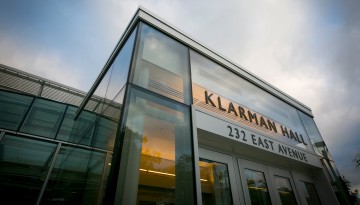
Applications are being accepted through Oct. 15 for the second cohort of the Klarman Postdoctoral Fellowship program, in the College of Arts and Sciences.
Since requesting proposals in April, the Cornell Atkinson Center for Sustainability has awarded approximately $250,000 in rapid-response grants for COVID-19-related Cornell research.
Cornell researchers are leading a review on the risk of coronavirus transmission through breast milk intake and breastfeeding, to inform WHO guidelines during the pandemic.
Kate Manne, an associate professor of philosophy in the College of Arts and Sciences, tackles male entitlement in her second book, “Entitled: How Male Privilege Hurts Women,” released Aug. 11.
Benjamin Houlton, director of the John Muir Institute of the Environment and professor of global environmental studies at the University of California, Davis, has been named the Ronald P. Lynch Dean, effective Oct. 1.
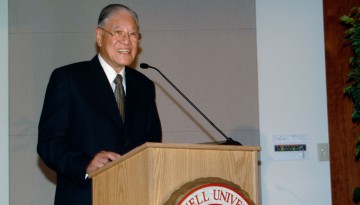
Lee Teng-hui, Ph.D. ’68, the first popularly elected president of Taiwan, who helped guide the island toward prosperity and democracy, died July 30 in Taipei. He was 97.
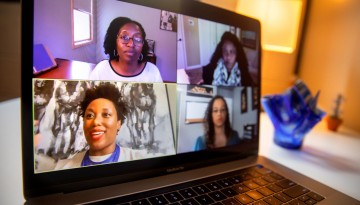
“Systemic Racism and Health Equity,” a webinar hosted July 23 by the Cornell Center for Health Equity, featured insights from three expert panelists and moderator Jamila Michener, associate professor of government and center co-director.
A new grant awarded to Cornell University Press by the National Endowment for the Humanities will support open-access scholarly publication and help offset the impact of COVID-19 on nonprofit university press publishing.
The Roper Center for Public Opinion Research at Cornell has identified and made available more than 80 years of public opinion surveys of Black Americans and U.S. public views of Black America.