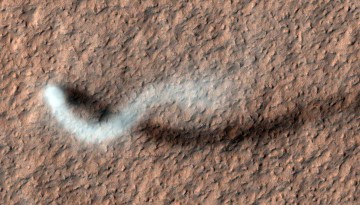
The National Academies’ latest decadal survey, “Thriving in Space,” released Sept. 12, provides a roadmap for biological and physical sciences research, from the low orbit of Earth to the surface of Mars, through 2033.
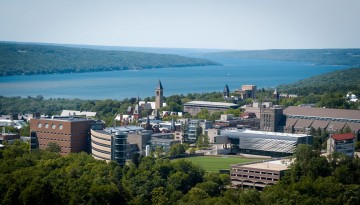
Eighty-four graduate students have been selected as new National Science Foundation Graduate Research Fellowship Program (NSF GRFP) fellows, joining Cornell’s community of nearly 250 NSF GRFP fellows.
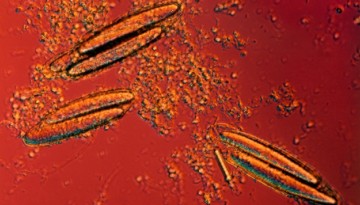
A new study testing the accuracy of existing methods used to predict the genetic variation that cause infertility found that relying on computational or in vitro experiments alone is insufficient.
Deborah Fowell, professor and chair of the Department of Microbiology and Immunology in the College of Veterinary Medicine, has received a five-year, $2.32 million MERIT award from the NIH to study the factors that help guide immune cells.
Robert Weiss has been appointed to a new senior associate dean position in the Graduate School to develop and implement a comprehensive plan to enhance programming and support for life science graduate fields at Cornell.
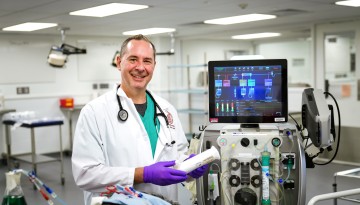
The Cornell University Hospital for Animals now has the capability of cleansing patients’ blood outside of their bodies, opening the door to new treatment options, including dialysis for animals with kidney failure.
An interdisciplinary research team received a five-year, $2 million grant from the National Science Foundation to develop a new generation of biosynthetic lubricants that have the potential to treat arthritis and reduce the painful friction of artificial joints.