During his term as president of the American Association of Immunologists, Dr. Gary Koretzky '78, vice provost for academic integration at Cornell, aims to improve science advocacy, public outreach and more.
The Veterinary One Health Association at Cornell hosted its annual symposium this weekend, Sept. 24 and 25. The two-day virtual event featured guest speakers, special lectures and a virtual poster session, all covering One Health issues.
Cornell is one of only seven institutions across the U.S. that will receive a funding award from the National Institutes of Health through a program aimed at increasing minority faculty in the biomedical sciences.
Paula Cohen, associate vice provost for life sciences, is leading an eight-year, $8 million, multi-institution grant to untangle the complex genetic rulebook for how sperm develops.
Galaxie, a 5-year-old black Lab diagnosed with B-cell lymphoma in 2018, is doing well after a rare bone marrow transplant, thanks in part to the care he’s received at the Cornell University Hospital for Animals.
A Baker Institute for Animal Health study finds the antimicrobial properties of certain stem cell proteins could help treat skin infections that are resistant to antibiotics.
Dr. Norman Sharpless, director of the National Cancer Institute at the NIH, will give this semester’s Distinguished Lecture in Cancer Biology Sept. 24 from noon-1 p.m.
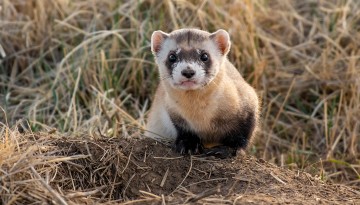
By testing easier-to-study coyotes, researchers from the Cornell Wildlife Health Lab at the College of Veterinary Medicine, in collaboration with the Cheyenne River Sioux tribe, have identified a range of lethal diseases threatening black-footed ferrets – one of the most endangered animals in North America.
Diagnostic tests are key to uncovering if it’s a virus making a pet lethargic, for example, or confirming that a tick found on the family dog carries the bacterium that causes Lyme disease — but should not be the only way to diagnose a case.