A new method that analyzes how individual immune cells react to the bacteria that cause the disease could pave the way for new vaccine strategies, and provide insights into fighting other infectious diseases around the world.
The Cornell University Hospital for Animals is launching its own blood bank for companion animals. There are only a handful of veterinary blood banks across the country, and it is uncommon for animal hospitals to have their own.
When Lou Walcer ’74 stepped into the new business incubator in Weill Hall 10 years ago, he saw opportunity. Now, the center has enjoyed a decade of success.
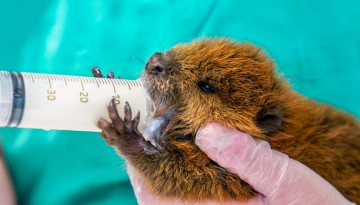
The Cornell Wildlife Hospital helped care for a litter of baby beavers, whose parents were trapped and killed at Lake George in the Adirondacks, nursing three of the surviving five back to health before sending them for rehabilitation.
Cornell Atkinson has awarded eleven Academic Venture Fund (AVF) seed grants for research by 40 faculty researchers representing eight Cornell colleges and 19 academic departments. The 2021 awards span 11 countries on five…
For the third year in a row, veterinarians from the College of Veterinary Medicine provided on-site care for the most elite dogs in the world, at the Westminster Kennel Club Dog Show, June 12-13.
Twenty faculty and professional staff members in four of Cornell’s state contract colleges have been selected for the 2020–21 State University of New York Chancellor’s Awards for Excellence.
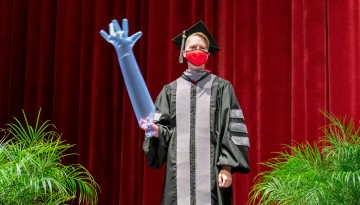
The class comprises 107 newly minted veterinarians with career plans that range from emergency medicine to dairy practices and laboratory animal residencies.
A Cornell-led research team’s improved cell therapy device effectively secreted insulin and controlled blood sugar in diabetic mice for up to six months – showing promise for the possibility of an effective, complication-free treatment for Type 1 diabetes, a chronic disease with no known cure.