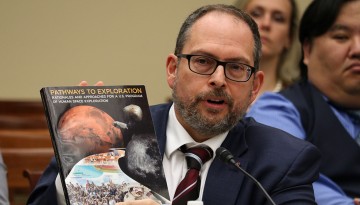
Cornell astronomer Jonathan Lunine suggested to Congress on May 8 reasonable, practical steps – including baby steps back to the moon – to help Americans one day put boots on the oxidized dust of Mars.
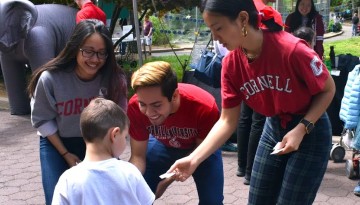
Cornell students spent Earth Day outdoors at the Smithsonian’s National Zoo in Washington, D.C., teaching patrons how to mold plastic in a different way – by reduction.
The proliferation of driverless vehicles could result in job losses of 1.3-2.3 billion by 2051, ILR School visiting senior scholar Erica Groshen said at an April 3 event in Washington, D.C., hosted by the Aspen Institute.
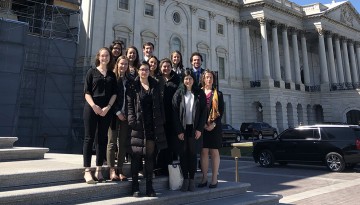
Eleven Graduate School students, joined by one law student and 10 students from Weill Cornell Medicine, traveled to Capitol Hill for Cornell Advocacy Day on March 27.
A team from Cornell has partnered with Alfred State College and the National Agency for Science and Engineering Infrastructure in Nigeria to help bring solar power to that African nation.
Global capitalism can rob many of a basic human right: the ability to work in a safe environment for fair wages, Solidarity Center executive director Shawna Bader-Blau said in the ILR Union Days keynote address.
Law School professor Sheri Lynn Johnson argued at the Supreme Court on behalf of a man from Mississippi who spent 22 years in prison, much of it on death row, for four murders he says he did not commit.
Cornell President Martha E. Pollack issued a statement March 15 condemning the mosque attacks in New Zealand and asking the Cornell community to reject the bigotry and hatred behind these acts.