Researchers and clinicians from Cornell’s Ithaca campus, Weill Cornell Medicine and Cornell Tech will gather for an online COVID-19 Summit, Nov. 4-5, to share their expertise and clinical experience with COVID-19.
Cornell’s network of business incubators and accelerators have developed into a growing and robust entrepreneurial engine nurtured with resources, training and mentorship that help faculty, research staff and graduate students launch marketable ideas and technologies.
Dr. Augustine M.K. Choi, the Stephen and Suzanne Weiss Dean of Weill Cornell Medicine and provost for medical affairs of Cornell University, has been elected to the National Academy of Medicine.
An intercampus research team has been awarded a five-year, $3.65 million grant from the National Institutes of Health to develop a quick, inexpensive method for accurately diagnosing urinary tract infections in kidney transplant patients.
For the third year in a row, Weill Cornell Medicine has been awarded the Health Professions Higher Education Excellence in Diversity Award by INSIGHT Into Diversity magazine.
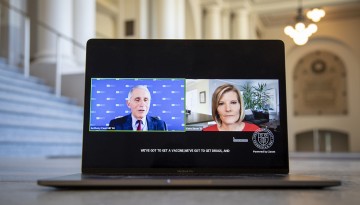
As part of StayHomecoming, Dr. Anthony Fauci, M.D. ’66, spoke with NBC News journalist Kate Snow ’91 in a virtual discussion that ranged from the search for a COVID-19 vaccine to Fauci’s experience battling the HIV/AIDS epidemic in the 1980s.
Cornell food scientists show in animal studies that a mother’s high-fat diet may lead to more sweet-taste receptors in taste buds resulting in poor feeding behavior, obesity in adulthood.