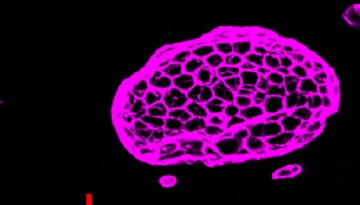
A team led by investigators at Weill Cornell Medicine and NewYork-Presbyterian has used advanced technology and analytics to map the cellular landscape of diseased lung tissue in severe COVID-19 and other infectious lung diseases.
Radiation therapy appears to increase the expression of genes with mutations that induce an immune response to malignant cells, according to preclinical research by Weill Cornell Medicine.
Cornell experts, including Neil A. Lewis Jr. ’13, assistant professor of communication and social behavior, have been part of several efforts to increase access and increase vaccine confidence, particularly in underserved communities.
Weill Cornell Medicine will launch a suite of innovative programs to foster and sustain a more diverse faculty through the support of the Mastercard Impact Fund.
Excess sugar in the blood, the central feature of diabetes, can react with immune proteins to cause myriad changes in the immune system, including inflammatory changes that promote atherosclerosis, according to a new study.
The Weill Cornell Medical College Class of 2021 learned on national Match Day, March 19, where they will be doing their internship and residency training, during the next several years of their medical careers.
In the next webinar of the College of Arts and Sciences’ yearlong series, “Racism in America,” panelists will focus on the impact of racism on access to health care and health outcomes, March 29 at 7 p.m.
Cancer cells can dodge chemotherapy by entering a type of “active hibernation” that enables them to weather the stress induced by aggressive treatments, according to a new study by scientists at Weill Cornell Medicine.
A team led by scientists at Weill Cornell Medicine has made a map identifying all the different RNA molecules that are derived from each gene in the brains of mice.