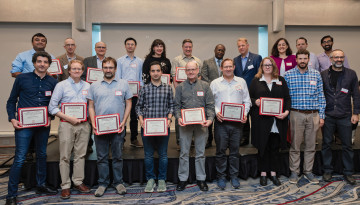
The Cornell Duffield College of Engineering celebrated faculty commitment to education at its 2026 Fall Faculty Reception, honoring this year’s Teaching and Advising Award winners for their contributions to outstanding curriculum design, teaching methods, student mentoring and faculty development.
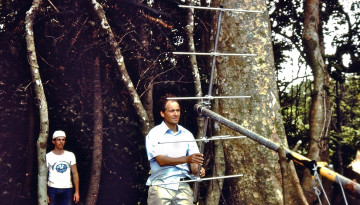
Bryan L. Isacks, the William and Katherine Snee Professor of Geological Sciences Emeritus in the Cornell Duffield College of Engineering who transformed the understanding of Earth’s surface, died Sept. 9 in Ithaca. He was 90.
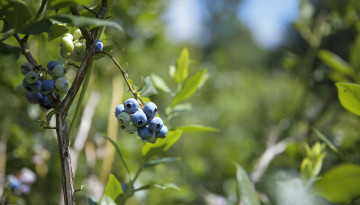
Fungal diseases can contribute up to 20% of staple crop losses and drug-resistant fungal infections lead to some 3.8 million human deaths, globally per year.
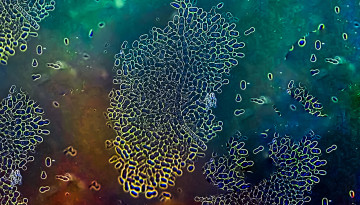
Superconductivity in iron selenide is primarily controlled by disorder in the crystal lattice, not electron count, Cornell physicists have found, a new insight for understanding high-temperature superconductors
Two new initiatives involving artificial intelligence in Cornell classrooms will encourage experimental and balanced use, while exploring ways to deploy AI that align with the teaching needs and strategies of individual academic fields.
Karine Jean-Pierre, 35th White House Press Secretary and former senior advisor to President Joe Biden, and Gov. David Beasley, former governor of South Carolina and past Executive Director of the UN World Food Programme, have been named the 2026-27 Distinguished Policy Fellows at the Cornell Jeb E. Brooks School of Public Policy.
The Buffalo Co-Lab at Cornell University’s ILR School has received a $1 million donation from James “Jim” E. Miller ’88 and his partner at Miller Shah LLP, James C. Shah.
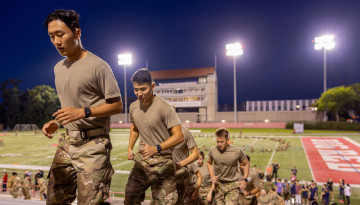
The annual 9/11 Memorial Workout is organized by Cornell Reserve Officer Training Corps (ROTC) and honors the first responders who lost their lives during the attacks on the World Trade Center. The workout brings together hundreds of Cornell cadets, veterans, staff and community members.
In his new book, “The Photographic World Picture: A New Prehistory of Photography,” associate professor Andrew Moisey describes how key aspects of photography’s “mechanical subjectivity” were present in early modern painting.