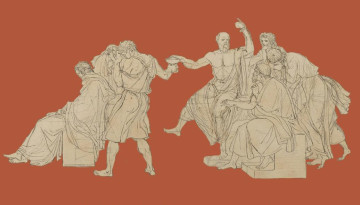
In his new book, “How to Speak Freely,” classicist Michael Fontaine of the College of Arts and Sciences shows that thousands of years ago, Athenians were struggling with the same topics societies struggle with today.
A collaboration between the U.S. Forest Service and the Cornell SC Johnson College of Business aims to shape sustainable tourism development for Puerto Rico’s El Yunque National Forest.
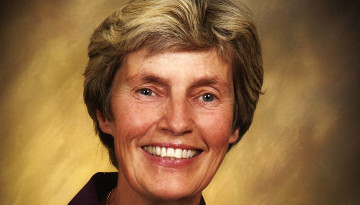
Tove Helland Hammer ’69, professor emerita of organizational behavior in the ILR School and the first female editor of the ILR Review, died on Sept. 12 in Ithaca. A professor at Cornell for 47 years, Helland was 80.
The discovery research center could uncover molecular markers that enable new diagnostics and lead to potential therapies for people living with neurological complications related to HIV.
New research has found that although food companies recognized clear benefits to pooling confidential food safety, concerns about trust, competition and shared standards continue to stand in the way.
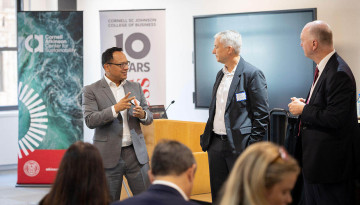
Financial strategies can advance sustainability goals, but only if environmental trade-offs can be measured and incorporated into decisions, a panel of experts said at a Climate Week NYC 2026 event co-hosted by the SC Johnson College and Cornell Atkinson.
Weill Cornell Medicine investigators have determined the mechanism by which a molecule within cells can help tune the light sensitivity of the eyes, a finding that should enable the development of drugs that target this site to treat related eye diseases.
As an undergraduate researcher, Maya Mangala-Munuma '25 found that trees were three times more likely to be damaged in impoverished, racially diverse neighborhoods.
New York state could catalyze a widespread clean energy transition and address its affordability issues by leveraging one of its most important resources – homes – according to a new report from the Climate Jobs Institute at the ILR School.
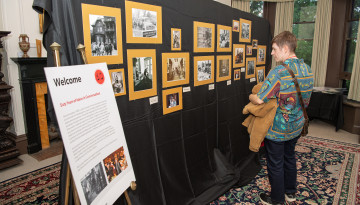
Cornell’s Society for the Humanities marked its 60th anniversary Sept. 18-19 with events celebrating six decades of humanities research and collaboration.
Cornell President Michael I. Kotlikoff and classics professor Mike Fontaine will discuss free speech and leadership Oct. 6 opening the Program on Freedom and Free Societies series.