ILR junior Jonathan Lam was recently named the inaugural recipient of the Trailblazer in Organizing and Activism Award given by Amnesty International USA. Lam and others were honored at the People Power Awards ceremony during the organization’s Annual General Meeting, held in February at the Westin Book Cadillac in Detroit.
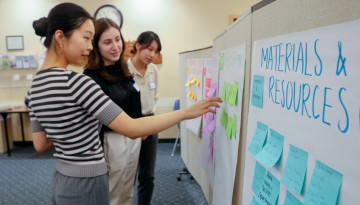
Sixteen doctoral candidates traveled from the Ithaca campus and Weill Cornell Medicine in New York City to Capitol Hill April 9 for the annual Cornell Ph.D. Student Advocacy Day.
Cornell’s Director of Postdoctoral Studies, Christine Holmes, was awarded the 2025 Distinguished Service Award by the National Postdoc Association (NPA) at their annual conference in March.
A Cornell University Sustainable Design student team worked with an array of municipal departments to assemble the extensive data needed to demonstrate that the city of Ithaca met the stringent requirements for LEED certification.
Princeton history professor Michael Gordin will give the inaugural lecture celebrating the life and work of Henry Guerlac ’32, M.S. ’33, an influential historian of science and Cornell faculty member for three decades.
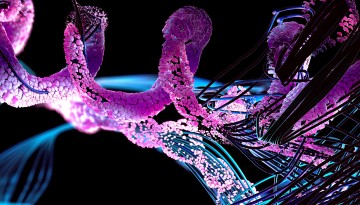
A new study from Weill Cornell Medicine provides insights into how cells maintain the tiny end caps of chromosomes as they divide, a key process in keeping cells healthy.
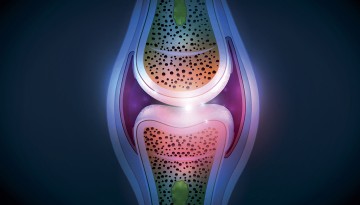
The same protein accumulates in the joints of both dogs and humans after ACL injury, which means using dogs as a model for study may vastly accelerate advances in understanding of both ACL injury and post-traumatic osteoarthritis.
The third annual Community Engagement Awards brought together students, faculty, staff and community partners to celebrate the power of collaboration and connection. Hosted by the Einhorn Center for Community Engagement on April 8 in the Statler Hotel Ballroom, the event recognized the diverse and far-reaching efforts of those working to create positive change in Ithaca and around the world.
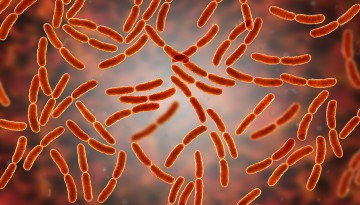
Bacteria naturally present in the human intestine can transform cholesterol-derived bile acids into powerful metabolites that strengthen anticancer immunity by blocking androgen signaling, according to a preclinical study.