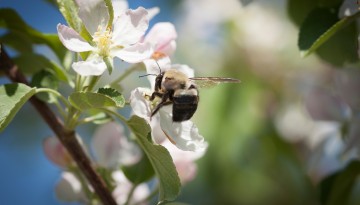
For the first time, Honey Bees: Their Intriguing Biology and Interactions with Humans (ENTOM 2030) will be offered during Summer Session 2023.This online course, taught by Dr. Marina Caillaud, a lecturer in the Department of Entomology, will examine the lives of bees, their contribution to humanity through the ages, as well as the threats they are currently facing.
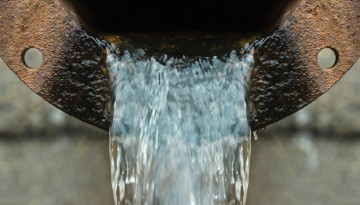
A new special issue of the Proceedings of the National Academy of Sciences, co-edited by Cornell economist Catherine Kling, advances the science of measuring the public benefit of clean water.
Cornell researchers have for the first time characterized a key property of the superconducting state of a class of atomically thin materials that are too difficult to measure due to their minuscule size.
Increasing women’s representation in science, technology, engineering and math majors will reduce – but not nearly eliminate – gender disparities in STEM occupations, new Cornell sociology research finds.
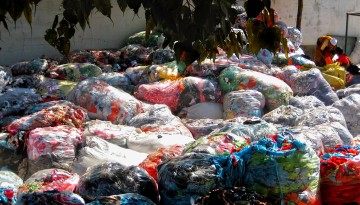
To make textiles more sustainable, a new method allows researchers to break old clothing down chemically and reuse polyester compounds to create fire resistant, anti-bacterial or wrinkle-free coatings that could then be applied to clothes and fabrics.
As the clock winds down on the academic year, CAMP program leaders are taking stock of its first-year successes as well as discussing where it can be improved for eligible students.
In this episode of the Inclusive Excellence Podcast, Erin Sember-Chase and Toral Patel are joined by two members of the newly formed Office of Talent Attraction and Recruitment team at Cornell for a conversation about creating connection in a world where many employees are working remotely.
Over the years, the Senior Class Campaign has helped foster a culture of giving while students are still on campus, during their final year as undergrads.
As the world population grows and climate change threatens agriculture and global food systems, researchers across Cornell CALS are reimagining agri-food systems for the 21st century.
In her new book, historian Tamika Nunley explores the personal stories of Black women and girls who struggled against enslavement and the limited justice that was available to them in early Virginia.