Public policy and sociology professor Matthew Hall will examine examining aging populations and their impact in the Phi Beta Kappa Distinguished Lecture Oct. 28.
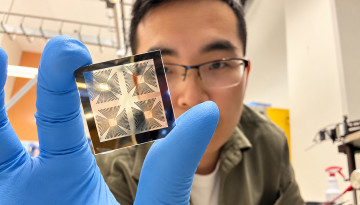
Set within a 3-millimeter area on a chip, the new device produces hydrogen gas bubbles on a grid of electrodes, then powers the bubbles up with acoustic energy through ultrasound.
Smoke dancers, American Sign Language poetry and explorations of endangered languages will highlight a series of events Oct. 15-Nov. 6 that celebrate the importance of language throughout U.S. history.
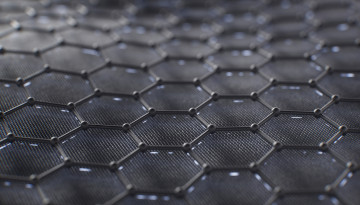
Researchers at the Cornell Duffield College of Engineering have found that electrically sliding the layers of ultrathin graphene can switch the material between distinct magnetic states that persist even after the voltage is removed.
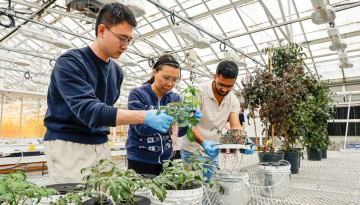
The Cornell-led multi-institutional Center for Research on Programmable Plant Systems will continue work to transform agriculture by enabling direct two-way communication with crop plants’ internal processes.
Parents of children with mental health problems may experience stigma when the ideals that matter most to being considered a “good parent” are perceived as not being met, according to research co-led by Weill Cornell Medicine.
The two-year Laidlaw Scholars Program supports undergraduates as they become globally minded researchers and ethical leaders. Applications opened this week for first- and second-year students interested in joining the next cohort.
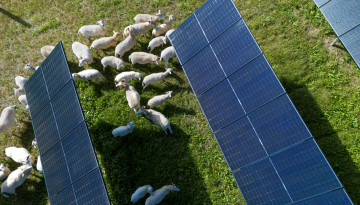
As solar grazing expands across the country, new research helps sheep farmers increase profitability and sheds light on the how the number of sheep in solar array fields interacts with beneficial insects.
A Cornell-led research team has for the first time resolved an exoplanet’s uneven contours, revealing how extreme heat and wind extend its atmosphere on one side.
Ficio, a startup founded by Youhanna Meleka, M.Eng. ’26, is developing an AI platform for the food supply chain that can run on different machines and tackle very different jobs – from sorting apples in an orchard to turning potatoes into french fries.
A new report authored by researchers from the Nolan Hotel School found that structural inequities – such as lack of access to capital investment – play an outsize role in Black women’s entrepreneurial journeys in the food industry.