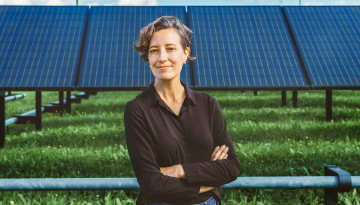
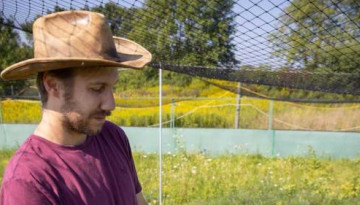
Riley Culberg, assistant professor, is a member of the science team for Snow4Flow, a new NASA mission to study how much ice glaciers contain and how much new snow they receive.
Sociologist Holly Jean Buck, Ph.D. ’17, a member of the University at Buffalo faculty, is one of 20 recipients of this year’s MacArthur Fellowships, known as the “genius grants,” for her research on climate change and environmental policy.
Upshaw, winner of five Grammys and a MacArthur Foundation Fellow, will present “Salon Solèy: Inhabiting Text & Music in Contemporary American Art Song,” at 7:30 p.m. Oct. 22 in Barnes Hall.
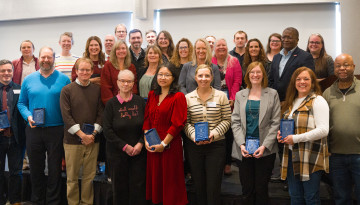
The Cornell Duffield College of Engineering celebrated its fifth annual EPICC Awards on Oct. 8 in Statler Auditorium, recognizing faculty and staff whose work exemplifies the college’s core values of excellence, purpose, innovation, community and collaboration.
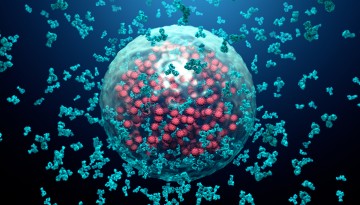
Researchers designed a new, faster form of two-photon fluorescence imaging for observing cell metabolism in real time, a method that could enable quicker screening of new therapeutic treatments.
Through plants and personal stories, a new student-led exhibit at Cornell Botanic Gardens explores the concept that people live because the natural world lives.
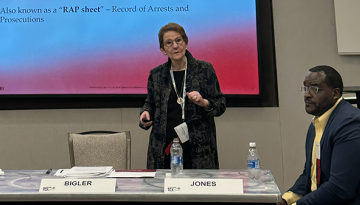
Esta Bigler, director of Labor Law and Employment Programs at the ILR School, presented on the topic of fair chance hiring at the New York State Bar Association’s Labor and Employment Law Section fall meeting, held in Ithaca earlier this month.
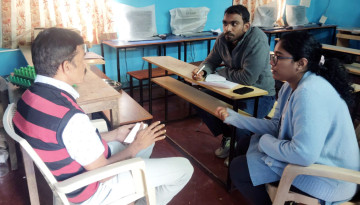
Overworked teachers in southern India have a new tool, developed by Cornell researchers, for educating their students: Shiksha Copilot, an AI system that generates culturally relevant lesson plans for schools with few resources.