Twelve Cornell graduate students have been selected for the Einaudi-SSRC Dissertation Proposal Development Program, the Mario Einaudi Center for International Studies announced.
Denise Morrison, president and CEO of Campbell Soup Co., visited Cornell May 4 with a message for female food scientists: You too can be leaders in the food systems industry.
Cornell scientists and engineers are seeing wind in high resolution, creating the world's largest, most-detailed wind maps ever from the picturesque hills of Perdigão, Portugal.
Twenty pairs of Cornell students and high school students are working together as part of a new Young Researchers Program of the Cornell Undergraduate Research Board.
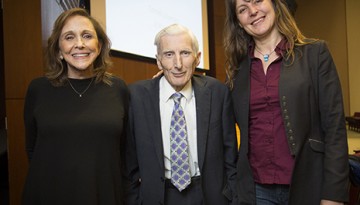
Lord Martin Rees, who has probed deep into the cosmos, studied gamma-ray bursts and galactic formation, spoke May 8 at Cornell on issues closer to home: the preservation of our “pale blue dot.”
Researchers report the discovery of the first fossilized flowers from South America, and perhaps the entire Southern Hemisphere, following an extinction event that killed most dinosaurs.
Organic material added by plant roots and microbes provide nutritious candy for the soil. Literally. Cellular sugar boosts water and nutrient retention, says new Cornell research.