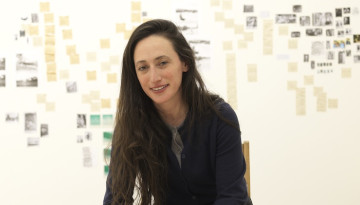
During her Yaddo residency, Danielle Russo developed a dance piece, enriching the work by drawing on ideas of ritual movement, personal memories and family history, and more.
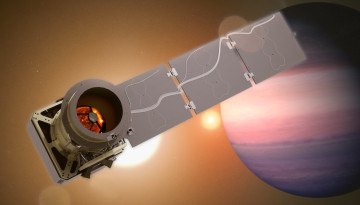
Tasked with studying exoplanet systems around small stars, the refrigerator-sized satellite is the first in NASA’s Astrophysics Pioneers program – small-scale missions designed to train early-career scientists, including Trevor Foote, Ph.D. ’24, a former member of the research group led by faculty member Nikole Lewis.
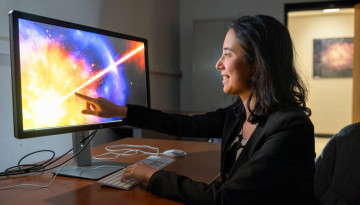
With the 2026 Newton Lacy Pierce Prize, the American Astronomical Society recognizes Anna Y. Q. Ho’s pioneering investigations of extreme explosions powered by stellar death.
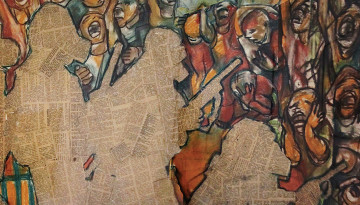
Women played a major role in debates surrounding the fight against apartheid in South Africa, Rachel Sandwell writes in a new book, “National Liberation and the Political Life of Exile: Sex, Gender, and Nation in the Struggle against Apartheid.”
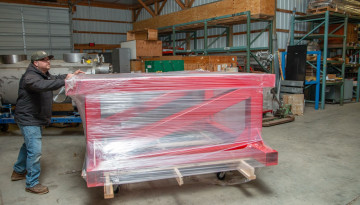
Behind a world-leading telescope bound for Chile is a team of engineers, machinists, electronics specialists and riggers at Cornell. Meet the specialized staff whose expertise is helping push cosmology to new frontiers.
A new study shows that using large language models like ChatGPT boosts paper production, especially for non-native English speakers, but the overall increase in AI-written papers is making it harder to separate the valuable contributions from the AI slop.