An interdisciplinary project involving faculty, staff and graduate students is sparking collaborations among those interested in computational, digital and data-driven approaches to the study of history, languages and culture.
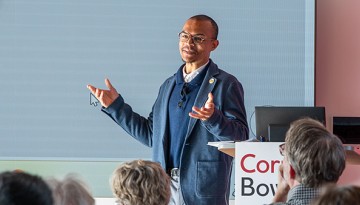
The panel, “AI + Education: Teaching and Learning in the Age of AI,” held during the 75th Trustee-Council Annual Meeting, painted a complete picture of the state of AI in education at Cornell.
The two-day event features performances of Farrenc’s chamber music on historical instruments, a reimagining of the salon culture in collaboration with the Johnson Museum of Art, and scholarly presentations.
Stacey Langwick, associate professor of anthropology in the College of Arts & Sciences, will speaking on "Healing in a Toxic World: Reimagining the Times and Spaces of the Therapeutic."
Seiberg, professor in the School of Natural Sciences at the Institute for Advanced Study, will explore string theory and other aspects of scientific progress
People say they would feel worse telling others about their charitable acts than if they kept the news to themselves, or told others about their personal achievements, the study found.
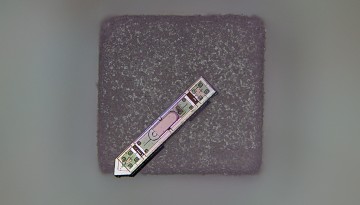
Cornell researchers and collaborators have developed a neural implant so small that it can rest on a grain of salt, yet it can wirelessly transmit brain activity data in a living animal for more than a year.