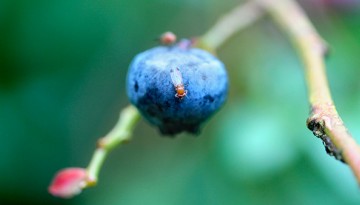
A Cornell study investigates for the first time what spotted-wing drosophila adults and larvae eat, and where they lay their eggs, when short-lived berries, their preferred foods, are not in season.
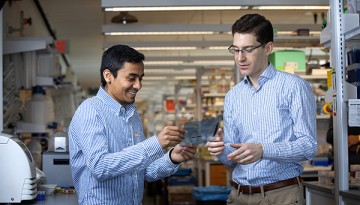
Cornell chemical biologist Jeremy Baskin has been recognized for his innovative work with a Walter A. Shaw Young Investigator Award from the American Society for Biochemistry and Molecular Biology.
A measure to conserve groundwater in northwestern India has led to unexpected consequences: Added air pollution in an area already beset by haze and smog.
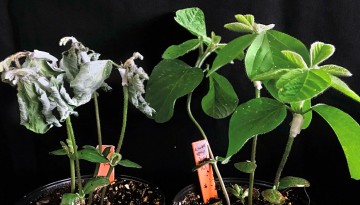
Protecting crops from pests and pathogens without pesticides has been a longtime goal of farmers. Researchers at Boyce Thompson Institute have found that compounds from microscopic soil roundworms could achieve this aim.
A new study co-authored by Kelly Zamudio, professor of ecology and evolutionary biology, shows that increasing class size has the largest negative impact on female participation in STEM classrooms.
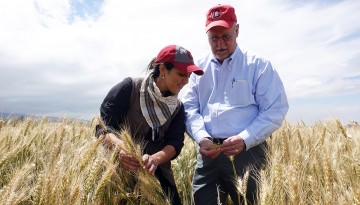
Ronnie Coffman, director of International Programs in the College of Agriculture and Life Sciences, addressed the International Wheat Congress July 23 in Canada, urging renewed commitment to germplasm exchange.
Cornell researchers have released a free, open-source software to help make potentially subjective and time-consuming plant breeding decisions more consistent and efficient.
Having healthy gut flora – the trillions of bacteria housed in our intestines – could lower the risk of infection following knee and hip replacement surgeries, while an unhealthy intestinal flora may increase the risk of infection.
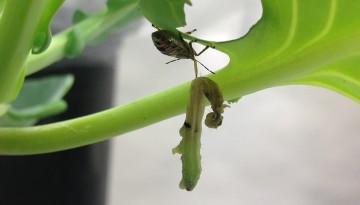
A new study of cabbage crops in New York reports for the first time that the effectiveness of releasing natural enemies to combat pests depends on the landscape surrounding the field.