A daylong community reading of portions of “The Iliad,” Homer’s epic poem about the Trojan War, is the next event in the College of Arts and Sciences’ “Arts Unplugged” series.
Our minds and the ways we tell stories are closely attuned, research shows, and scholar Fritz Breithaupt will explore how that connection works during a March visit as University Lecturer.
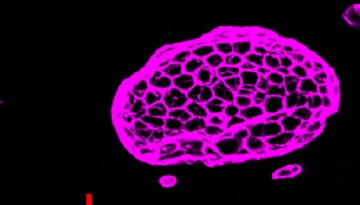
A tiny eukaryotic organism provided inspiration for modeling “traveling networks” – connected systems that move by rearranging their structure. Understanding these networks may help explain the behavior of certain biological systems and human organizations.
Professor Wendy Ju has been awarded a place in the Class of 2025 of the prestigious Association for Computing Machinery Special Interest Group on Computer-Human Interaction Academy.
Working toward more effective tuberculosis vaccines, researchers at Weill Cornell Medicine have developed two strains of mycobacteria with “kill switches” that can be triggered to stop the bacteria after they activate an immune response.
New Cornell Johnson School research explores why doctors may fall prey to conflicts of interest and proposes a new approach called “deep professionalism.”
For her skilled management and healthy sense of humor, Sarah Albrecht, administrative manager of the Science and Technology Studies Department in the College of Arts and Sciences, received the Employee Assembly’s 2024 George Peter Award for Dedicated Service.
The process of combining agricultural production and solar panels on the same farmland, known as agrivoltaics, has seen a great leap in Cornell research activity.
In a musical journey through the cosmos, the Cornell Symphony Orchestra will perform the world premiere of “Ex Terra, Ad Astra,” a new work commissioned especially for this year’s Young Person’s Concert.
ILR Assistant Professor Yiran Zhang has published a pair of papers exploring the garment supply chain in China – both factory jobs and informal, home-based ones that have sprung up out of need as women try to make money while also serving as “companion mothers” to their school-aged children.
After two pilot issues, the journal has launched a media-rich inaugural volume, "Sovereignty / Populism," and dedicated itself to disseminating experimental scholarship and creative work to a broad audience.