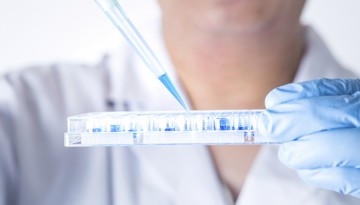
New research has resulted in the first high-resolution molecular picture of the inner lining of the equine uterus, highlighting surprising similarities in immune cells between early human and horse pregnancy given the vastly different placentas.
New research shows how dogs' antibodies bind to and neutralize parvovirus - and builds on generations of work on the disease at the Baker Institute for Animal Health.
Health information technology systems promised increased efficiency and reduced costs, but new ILR School-led research suggests these benefits have been elusive.
In this episode of the Inclusive Excellence Podcast, Erin Sember-Chase and Toral Patel are joined by Thomas Jones ’24, who shares his journey from incarceration to higher education and his role as fair employment practice specialist at Cornell.
The Feb. 27 public lecture will be the third event in the Black History Month series organized and hosted by the Center for Racial Justice and Equitable Futures.
Teaching is a practice, and a craft. It’s also an art. And the art of teaching is the subject of a new workshop series, which debuts this February at the Center for Teaching Innovation, with “The Art of Discussion.”
Weill Cornell Medicine physician-scientists Dr. Niroshana Anandasabapathy and Dr. Rohit Chandwani have been elected members of the American Society for Clinical Investigation for 2025.
The Cornell University Scheinman Institute on Conflict Resolution's Liz Davis-Frost and Katrina Nobles discuss how focused listening promotes understanding and problem-solving on the Cornell Keynotes podcast.
Cornell Tech, the groundbreaking campus of Cornell University dedicated to developing leaders and technologies for the AI era, has announced the opening of The Bridge, a new state-of-the-art flexible workspace for entrepreneurs, early and mid-stage ventures, and more established companies.
Brian Crane began as Director of the Weill Center for Cell and Molecular Biology on January 1, 2025. He is only the second Director in the History of the Weill Institute since its founding by inaugural Director Scott Emr in 2008.
A Cornell-led collaboration uncovered the equipment that enables bacteria to survive exposure to antibiotics: a shuttling mechanism that helps a complex of proteins pump out a wide spectrum of antibiotics from the cell.