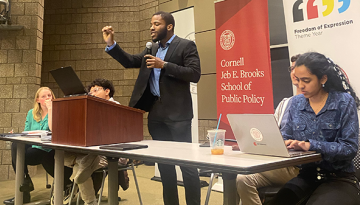
Contract negotiations have begun between Cornell and the union that represents graduate teaching assistants, graduate research assistants, research assistants and graduate assistants at the Ithaca, Geneva and Cornell Tech campuses.
For Malika Grayson, M.S. ’14, Ph.D. ’16, earning advanced degrees in mechanical engineering at Cornell propelled her entrepreneurial journey in STEM advocacy, inspiring her to motivate others to pursue their dreams and overcome challenges.
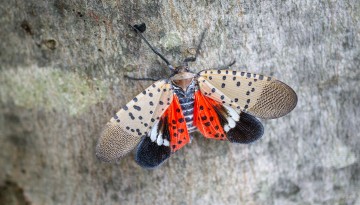
Researchers at the Hudson Valley Research Laboratory – part of Cornell AgriTech – are working to identify effective strategies that the region’s fruit growers can use to fight the invasive spotted lanternfly.
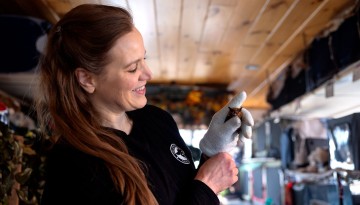
Cornell Lab of Ornithology staff member Victoria Campbell spends her free time caring for bats in need – setting tiny broken bones, feeding babies, treating illness and nursing native bats back to health so they can be released.
A Cornell-led research team derived the age of Selam, a “moonlet” orbiting the asteroid Dinkinesh in the main asteroid belt, based only on the pair’s dynamics.
Dozens of stakeholders responsible for the new building for the Cornell Ann S. Bowers College of Computing and Information Science penned their names onto a 20-foot steel beam that will soon buttress the building’s fourth floor.
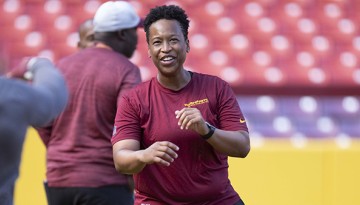
In 2021, Jennifer King became the first black woman to earn a full-time position on an NFL coaching staff. On May 3 she will be the featured speaker at an event in Newman Arena.
Afghan visual artist Elja Sharifi, currently a visiting scholar at the Herbert F. Johnson Museum of Art, sees her escape from the Taliban as a call to action. She will enter Cornell’s PhD program in art history next fall.
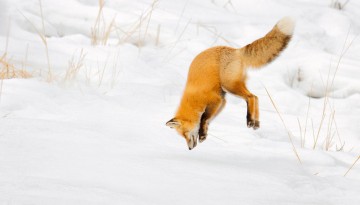
When hunting for mice in winter, red and arctic fox are known to plunge headfirst into snow but their sharp noses reduce the impact force and protect them from injury, according to a new study.
“Science Guy” Bill Nye ’77 recalled the state of mechanical engineering when he was a student, and looked ahead to the field’s future at “Sibley 150,” a celebration of 150 years of mechanical engineering at Cornell.
A new paper attempts to quantify how decarbonizing the China Southern Power Grid, which provides electricity to more than 300 million people, will negatively impact river basins and will reduce the amount of cropland in China.