Older adults with impaired memory exhibit selective language deterioration – a finding that could lead to earlier detection and ultimately more effective treatment of Alzheimer’s disease.
After examining pasteurized single-serving milk cartons, Cornell food scientists found bacterial counts two weeks after processing were higher than in larger containers from the same facilities.
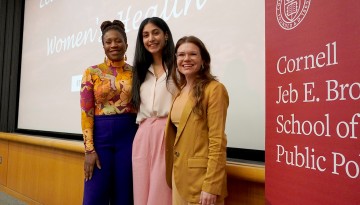
The Women+ in Health Care Leadership Symposium, organized by students in the Sloan Program in Health Administration at the Cornell Jeb E. Brooks School of Public Policy, featured a diverse panel of women for their speaker series.
Francine Barchett, a doctoral candidate in natural resources and the environment, was selected as the third youth representative for the World Food Prize Foundation Council of Advisors since the program launched in 2021.
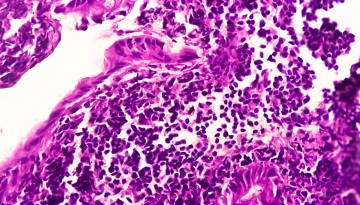
Researchers comparing intestinal samples of children with Crohn’s disease and healthy children found one molecule that shows significant differences between the two groups.
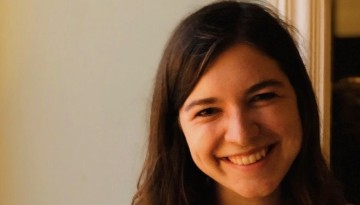
Margarita Amalia Suñer, professor of linguistics emerita in the College of Arts and Sciences (A&S), died in Ojai, California on Feb. 29 after a long bout with Alzheimer’s disease. She was 82.
"The Status of Child Care in New York State," a new report from the ILR School's Buffalo Co-Lab, finds recent increases in state subsidies have been insufficient to reduce inequities in child care access and quality.
In this episode of the Inclusive Excellence Podcast, Erin Sember-Chase and Toral Patel are joined by Ati Alipour, assistant ombuds in the Cornell University Ombuds Office, to share insight on addressing and navigating conflicts in everyday work and life.
When Lifespan Labs human development researchers in the Psychology Department needed a better way to schedule and enter family data for their studies, they partnered with the CIT Enterprise Applications team to find an affordable and low-code solution.
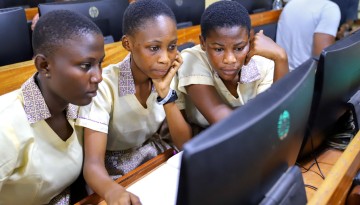
Ghana’s fledgling tech sector has a chicken-and-egg problem: To grow, it needs trained, local workers, but without existing job opportunities, students don’t pursue degrees in computer science.
“Beyond the World as Picture: Worlding and Becoming the Whole World [devenir tout le monde],”will examine philosophical accounts of the ways in which we organize the concept of reality.