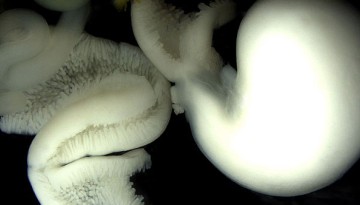
Research from the Kurpios lab reveals the complex signaling that directs formation of intestinal lacteals, the lymphatic channels required for fat absorption in vertebrates.
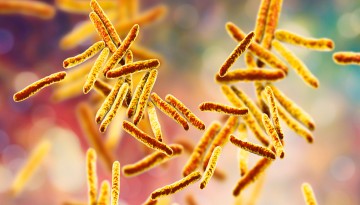
Mycobacterium tuberculosis, the hardy bacterial species that causes tuberculosis, has an unexpected vulnerability that future drugs may be able to exploit, according to a study from researchers at Weill Cornell Medicine.
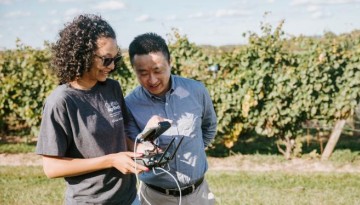
Cornell AgriTech’s Summer Research Scholars Program is increasing the number of underrepresented student participants and boosting expertise in digital agricultural technology, thanks to a grant of nearly $500,000 from the National Institute of Food and Agriculture (NIFA).
Following a sweeping effort in 2019 to address clinical care team well-being across Weill Cornell Medicine, physicians note a reduction in stress and feelings of burnout compared to previous surveys, according to a new report from the institution.
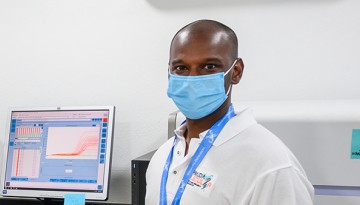
Cornell connections led virology scientist and MBA grad Pradeep Ambrose to help Bermuda grapple with a COVID surge and serve as interim science advisor.
Cornell will require all students, faculty and staff to have a COVID-19 vaccine and booster as part of comprehensive vaccination. The booster requirement must be met by Jan. 31, or 30 days after becoming eligible.
Milo’s skin problems were just the start of his medical issues. Months of treatment and a loving home eventually inspired a children’s book celebrating his resilience.
The Ezra’s Bridge program aims to address challenges faced by populations underrepresented in chemical and materials sciences by providing students with a full-tuition scholarship, research opportunities and mentoring.
A new X-ray technique developed at Cornell offers an unprecedented look at the elaborate inner workings of batteries while they are in use – a breakthrough that is already yielding important findings for the development of next-generation energy storage.
Animal Science Professor Xingen Lei has been named a Fellow of the National Academy of Inventors, in recognition of his groundbreaking work on livestock phosphorus nutrition that improves global animal agriculture, preserves non-renewable phosphorus, and protects the environment.