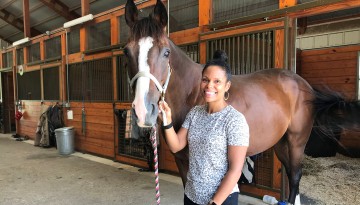
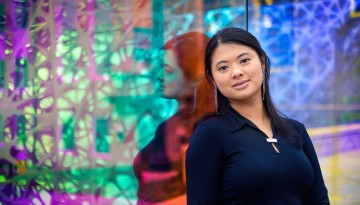
“Pop Goes the Vet with Dr. Joya” will feature the work of Joya Griffin, D.V.M. ’06, whose practice specializes in animal dermatology. The show premieres Jan. 1 and will stream on Disney+.
An upcoming book by a Cornell doctoral student explores a new field of study related to the use of Unmanned Aerial Vehicles, typically referred to as drones, in warfare.
Four projects have been selected for Cornell Library’s annual Grants Program for Digital Collections in Arts and Sciences, which boosts the collaboration of scholars and library specialists to transform physical materials into lasting online resources for teaching and research.
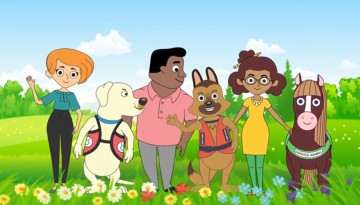
The Northeast ADA Center, in collaboration with the ILR School’s Yang-Tang Institute, is developing a 10-episode cartoon series that teaches children, their families and educators about disability issues such as assisted technology, transportation, communication and service animals.
Cornell COP26 delegation fueled the climate conversation in Glasgow, building new and unexpected connections to catalyze extraordinary change with support from Cornell Atkinson.
The COVID-19 pandemic has shown humanity a new way to reduce climate change: Nix in-person conventions. Putting meetings online can reduce carbon footprints by 94%, says a Cornell study.
Design Connect participants and leaders reflect on over a decade of successful projects and the organization's unique benefit to students from various disciplines, who collaborate among themselves and with groups across the Upstate New York area.
The Zhu Family Graduate Fellowships in the Humanities will recognize and support a select group of high-potential graduate students in their fourth or fifth years.
Around 1,450 Cornell students completed their studies this month. While the December Recognition Ceremony was canceled, some shared their university experiences.
IBM executive Carla Grant Pickens joins ILR Dean Alex Colvin and ILR Associate Professor Vanessa Bohns on the latest episode of WORK! to discuss what has been learned during the pandemic about workplace conflict and the role of influence.
Ethan Dickerman, a master’s student at the Cornell Institute for Archaeology & Material Studies, created the Tompkins County Rural Black Residents Project as part of a Rural Humanities Seminar, hosted by Cornell’s Society for the Humanities.