The major gift from the Brooks family, whose Cornell roots span three generations, provides an early boost to help the university’s newest school achieve world-class excellence.
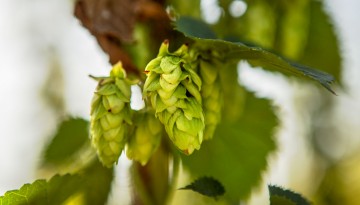
A $300,000 investment from New York state has paved the way for a new hops breeding program at Cornell AgriTech, which will grow and develop signature New York hops varieties in support of the state’s $3.4 billion craft brewing industry.
Six graduate students were awarded 2021 Hsien and Daisy Yen Wu Scholarships. These scholarships recognize graduate students for their academic ability, performance and character as well as financial need.
The Society for the Humanities added to its grant offerings in 2021, awarding Humanities Impact Grants to humanities projects that “engage in broader public conversations with social impact in mind.”
Cornell researchers used dendrochronology and a form of radiocarbon dating called “wiggle-matching” to identify the ancient origins, and possible purpose, of a unique wooden structure in Northern Italy.
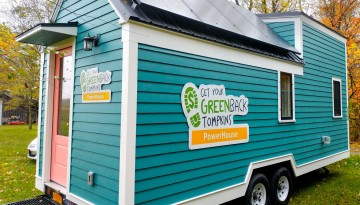
Part of the Cornell Cooperative Extension(CCE) Tompkins County Get Your Greenbacks program, the PowerHouse helps CCE educators tackle environmental issues and social inequities by making energy savings concepts tangible and easy to understand.
Joseph Margulies, professor of the practice of law and government, has been awarded the 2021 George D. Levy Faculty Award for his work to break down barriers for previously incarcerated people in Tompkins County.
A Schuyler County-Cornell pilot project could help New York farmers diversify their crops and give regional food manufacturers a cost-effective source for the popular legume.
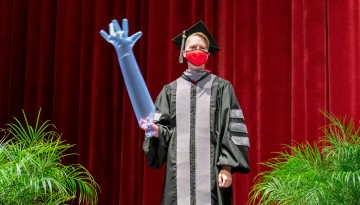
The class comprises 107 newly minted veterinarians with career plans that range from emergency medicine to dairy practices and laboratory animal residencies.