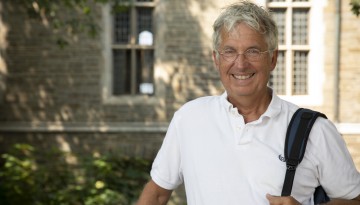
In 2020, Charles “Charlie” Van Loan volunteered to stay on as dean of the faculty for an additional year “after it became clear that the COVID-19 pandemic would ravage how we run the place,” he said.
The new Student Code, approved in Dec. 2020, focuses on making sure that the conduct process is objective, transparent, fair, and that students are an active participant throughout the process.
A Cornell-led research team’s improved cell therapy device effectively secreted insulin and controlled blood sugar in diabetic mice for up to six months – showing promise for the possibility of an effective, complication-free treatment for Type 1 diabetes, a chronic disease with no known cure.
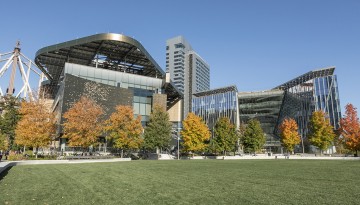
Cornell Tech awarded four student startup companies with pre-seed funding worth up to $100,000 in its eighth annual Startup Awards competition, announced at Cornell Tech’s virtual Open Studio, held May 26.
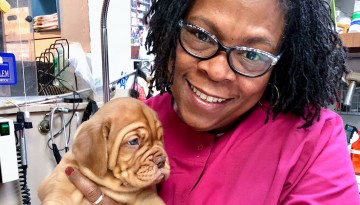
Dr. Julie Butler, D.V.M. ’83, cared for Harlem and its pets for 30 years. Her death due to COVID-19 inspired the College of Veterinary Medicine to establish a scholarship in her name.
How are state Extension systems rising to meet needs highlighted by the COVID-19 pandemic? Dr. Caroline Crocoll Henney, executive director of the national Cooperative Extension System, joins the Extension Out Loud podcastto discuss.
Algorithm uncertainties are just one of several challenges social media content creators face, according to new research led by Brooke Erin Duffy, associate professor of communication.
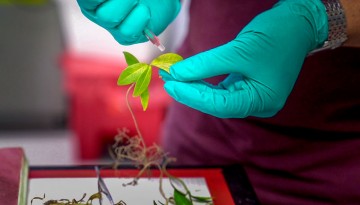
A breakthrough technology uses nanoscale sensors and fiber optics to measure water status just inside a leaf’s surface, providing a tool to greatly advance our understanding of basic plant biology, and opening the door for breeding more drought-resistant crops.
As a CIFAR Azrieli Global Scholars, Baobao Zhang will investigate challenges governments face when addressing public perceptions of inequalities brought about by new technologies and Elizabeth Johnson will look into connections between infant nutrition and gastrointestinal health.
Scott Emr, director of the Weill Institute for Cell and Molecular Biology and professor of molecular biology and genetics, was awarded the prize for the landmark discovery of complexes that are central to life, health and disease.