Filters
Topics
Campus & Community
Colleges & Schools

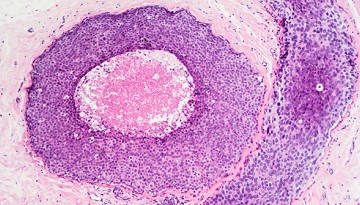
New immune cell suspects in lupus

The findings could redirect lupus research and open the door to more precise therapies that avoid broad immune suppression.

Talk examines Civil Rights Act’s unintended consequences

Legal scholar Gail Heriot will describe a chain of unintended consequences of the Civil Rights Act of 1991 in her talk "Why We Walk on Eggshells," Dec. 8.

Around Cornell

Weill Institute for Cell and Molecular Biology awards 2025 Fleming Fellowship

For research excellence into how living structures recover and preserve order in morphology amid constant disruption, postdoctoral scientist Lanxi Hu has been awarded the Weill Institute for Cell and Molecular Biology’s 2025 Sam and Nancy Fleming Research Fellowship.   

Around Cornell

$7M grant from NASA, Schmidt Sciences to upgrade arXiv

The funding will help arXiv – which is maintained and operated by Cornell Tech – finish migrating to cloud infrastructure and modernizing its code. 

REEgen wins $150,000 in FuzeHub Commercialization Competition

REEgen, a Cornell spinout focused on rare earth element (REE) recovery, won the $150,000 grand prize at the 2025 FuzeHub Commercialization Competition, held at the New York State Innovation Summit on Oct. 29-30.

Around Cornell

New cohorts of engaged fellows contribute to campus community-engaged learning network

Twenty-six faculty members from nine Cornell schools, colleges and administrative units are part of the 2025-26 Engaged Faculty Fellows cohort

Around Cornell

Professor emerita Stephanie Vaughn, ‘writer’s writer,’ dies at 81

Vaughn taught creative writing and literature at Cornell for 39 years, retiring in 2022 as professor of literatures in English emerita. 

Molecular switch could cause painful side effect of chemo

Chemotherapy activates a stress sensor in immune cells, which may help explain why many cancer patients experience debilitating pain as a side effect, according to Weill Cornell Medicine and Wake Forest University researchers.

Teens prepared for puberty report fewer mental health issues

New study suggests that teens who understand the changes caused by puberty will be more confident in handling those changes, a concept called pubertal self-efficacy.

Career Development targets resources for students in tech fields

Students in tech fields now need to target specific organizations that match their interests, skills and values, and tailor their application materials to those specific organizations.  

Around Cornell

CHPC engages business leaders to help inform research initiatives

The Cornell Health Policy Center organized its first Business Leaders Roundtable in New York City last week with the aim of engaging senior industry leaders from the health care sector with existing and upcoming research on topics like Medicare Advantage, Medicaid reform, and prescription drug pricing.

Around Cornell

New tech can unlock mysteries of genome’s hidden half

Cornell researchers have found that a new DNA sequencing technology can be used to study how transposons move within and bind to the genome.