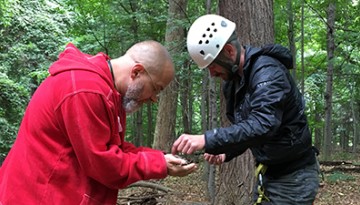
This fall, Mark Sarvary in the Department of Neurobiology and Behavior, launched Introduction to Applied Science Communication: Digital Platforms and Public Engagement.
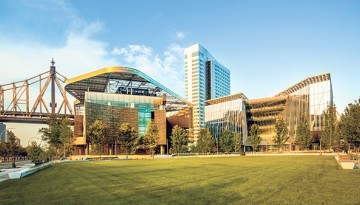
The Samuel Curtis Johnson Graduate School of Management marked a major milestone Sept. 13 at the official dedication of the new Cornell Tech campus on Roosevelt Island in New York City.
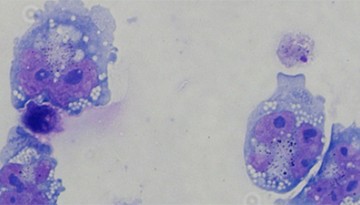
Errors in the regulation of gene expression may contribute to the development of a common form of blood cancer and point to potential treatment strategies.
In a study that has implications for scientific policy and labor markets, new research finds one-third of science and engineering Ph.D. students lose interest in an academic career by the time they graduate.
After 360 engine burns, 2.5 million executed commands, 635 gigabytes of gathered data, 162 moon flybys, 4.9 billion miles traveled, NASA’s 20-year Cassini mission ran the last lap of its historic scientific mission Sept. 15.
Cornell scientists in partnership with state agencies identified oak wilt, a devastating pathogenic fungus that kills oak trees, in four towns on Long Island, in Brooklyn and in Canandaigua.
President Martha E. Pollack sent a message to the Cornell community Sept. 17 outlining steps to make the university a more equitable, inclusive and welcoming environment in the wake of recent racial incidents.
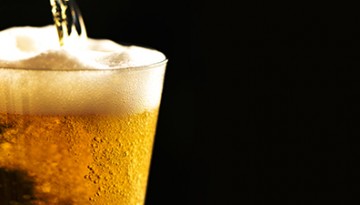
Heavy drinking six times a month reduces by 10 percent the probability a new college graduate will land a job, according to research led by the ILR School’s Smithers Institute.
Cornell's New York City schools and units gathered to welcome Martha E. Pollack as the university's 14th president at a reception Sept. 14 at Weill Cornell Medicine.
Off-Campus Living website has added a new safety ratings feature, based on publicly available information, to help student renters in the city of Ithaca.