In 2025, four companies with Cornell-originated technologies — SafetyStratus, Bactana Corporation, Guard Medical and Halo Labs — were acquired by global corporate partners, allowing Cornell technologies to reach broader markets.
Cornell Engineering is rapidly becoming a leader in engineering education research, a field dedicated to designing effective education systems and learning experiences for students. The insights emerging from this work have the potential to redefine engineering education on campus and far outside it.
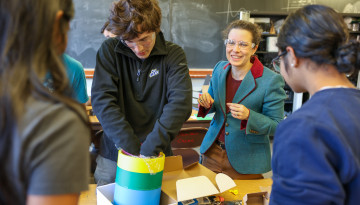
CTI's 2024-2025 Innovative Teaching & Learning grant recipients focused on how students' thoughts are shaped and expanded upon through the agency of storytelling and the power of metacognitive assessment.
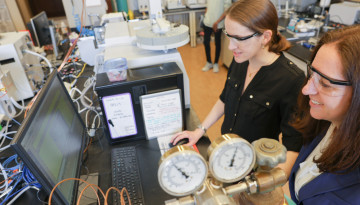
An interdisciplinary team of researchers determined that organic residues of plant oils are poorly preserved in calcareous soils from the Mediterranean, leading decades of archaeologists to likely misidentify olive oil in ceramic artifacts.
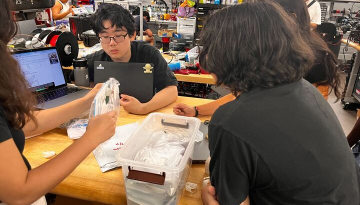
A project led by Cornell’s Center for Point of Care Technologies for Nutrition, Infection and Cancer to develop a low-cost, battery-powered device for sample preparation in tuberculosis (TB) testing in areas with limited lab access and infrastructure, has received a $250,000 grant from the Gates Foundation.
The second annual Cornell Systems Summit, Nov. 2–4, brought together international experts to discuss the future of systems engineering across sustainability, health systems and semiconductor manufacturing.
With the largest gift from a Cornell Engineering alumna in the college’s history, Lisa Walker ’86 has established the Lisa L. Walker 1986 Distinguished Professor of Chemical and Biomolecular Engineering, creating an endowed professorship and accompanying research fund to support exceptional faculty.