Cornell is a global leader in sustainability and climate change research, teaching and engagement. Our campuses are living laboratories for developing, testing and implementing solutions that address these most challenging issues.
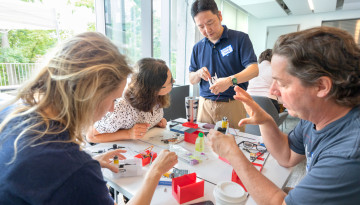

NYS teachers take on microplastics with snail-inspired robot

Researchers and extension staff translated complex research into a hands-on curriculum – including the construction and deployment of floating robots – for New York State teachers and their students. 

AI plus chemistry can expand battery electrolyte design

Artificial intelligence is aiding the search for better battery materials while using a creative approach to chemistry to expand the design space for electrolytes, unlocking new possibilities for safer, higher-performing energy storage.

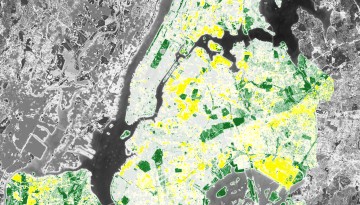
Tree-focused tech aims to bring more shade to vulnerable New Yorkers

Announced Aug. 5 at Cornell Tech, a research partnership will help neighborhoods in Brooklyn, Queens and the Bronx identify where new trees are needed most to improve public health.

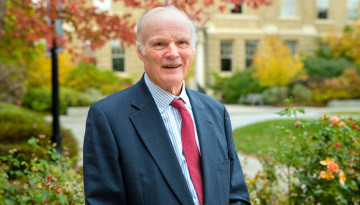
Stephen Ashley ’62, MBA ’64, trustee emeritus and CALS benefactor, dies at 86

Trustee emeritus and philanthropist Stephen Ashley ’62, MBA ’64, whose service and advocacy for Cornell spanned more than five decades, died July 29 in Richmond, New York.

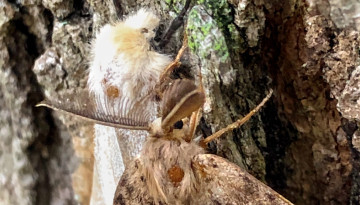
Satellite imagery could protect trees from devastating moth outbreaks

Satellite-derived maps of defoliation caused by European spongy moths offer a promising solution for tracking pest outbreaks and for identifying large scale trends. 

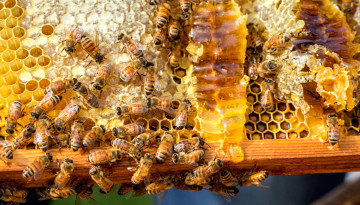
Insights into bee biology could ease US rules for organic honey

Strict regulations have prevented continental U.S. beekeepers from participating in the lucrative organic honey market, but new findings could provide evidence to open organic markets to U.S. producers.

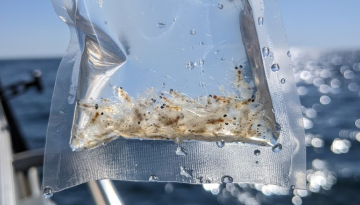
Cornell leads a Lake Ontario food web study in $1.5M Sea Grant research suite

Cornell University’s James Watkins and Kade Keranen are leading a nearly $240,000 study to examine the abundance of mysid, small, shrimp-like crustaceans that are critical links in Lake Ontario’s aquatic food web.

Around Cornell

Soil carbon effectively measured by new, efficient AI model

A new model offers a proof-of-principle for how AI might be used to shed light on obscure biological processes.

Colorado West Slope water shortages require careful coordination

A new Cornell study shows how drivers of water shortage, from melting snowpack to growing population demands, may impact Colorado’s West Slope River basins and Lake Powell – a major source of energy and water supply for 40 million people.