Deep connections drive psychedelic research
By David Nutt, Cornell Chronicle
Astronomers rarely attempt space travel. Marine biologists are not necessarily certified SCUBA divers.
Yet Alex Kwan is often asked if he takes psychedelic drugs.
“There is a sector of people who feel strongly that, as a researcher in this topic, you should have the subjective experience and try some of the compounds,” said Kwan, Ph.D. ’09, professor of biomedical engineering in the Cornell Duffield College of Engineering and a driving force in Cornell’s growing multidisciplinary investigation into the relationship between psychedelics and the brain. “There are other people who think that could cloud your judgment. So there are arguments on both sides. But it’s not something I’ve tried myself.”
From Timothy Leary’s provocative experiments with LSD to the CIA’s infamous MKUltra program, the early attempts to research psychedelic drugs were not exactly models of scientific rigor. But as hallucinogens gain more support from the medical community as a potential treatment for severe depression and post-traumatic stress disorder – and with the U.S. government relaxing its regulatory constraints – there remains a vast gap in understanding how the drugs work on the brain.
In recent years, Kwan and other Cornell researchers have made crucial discoveries about the basic neurobiology and mechanics behind psychedelic compounds such as psilocybin. They’ve shown how psychedelics rewire the brain’s neural pathways and affect its blood flow, how the compounds influence animal behavior, and have developed minimally invasive electrodes that record long-term changes in neural activity in mice – and potentially humans.
“There’s a lot of excitement about using psychedelics in our society, but our actual understanding of the drug remains quite poor,” Kwan said. “The promise is so great, but the thing that I strive for, and what Cornell can contribute, is the basic understanding of the science. We need to fill in the rigor that should be there to balance the promise and the excitement.”

Deep connections
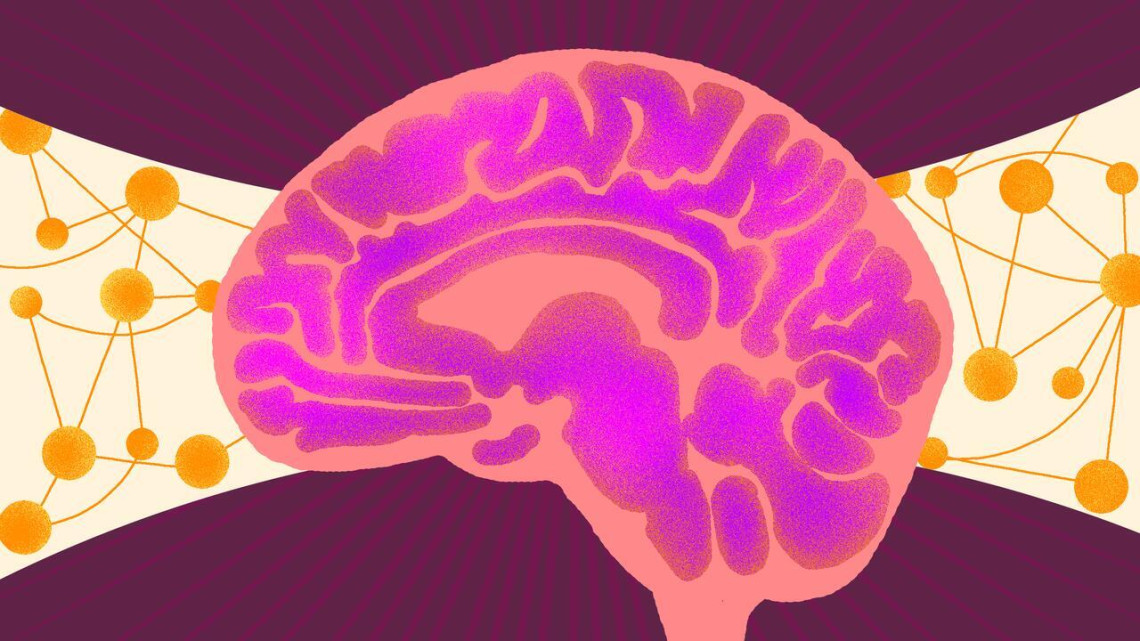
Psychedelic science at Cornell, like the brain itself, depends on a network of deep connections.
The linkage between most of these collaborations is Kwan.
“What I see in Alex’s work, which is really the linchpin that all the rest of us are building on, is this commitment to slow, methodical, careful, mechanistically oriented experiments and projects that help us really understand what these drugs are doing on a molecular, cellular, neural systems basis,” said Chris Schaffer, Meinig Family Professor of Engineering in Duffield Engineering and dean of faculty.
Since Kwan joined Cornell’s faculty in 2022, his lab has found that a single dose of psilocybin increased the number of neuronal connections in a mouse brain by about 10%; identified key components of the neural circuit that mediates the long-term effects of psilocybin; and shown how psilocybin weakens the feedback loops that lock people into negative thinking while enhancing sensory-motor responses.
“We have been working hard to figure out what are the different cell types and different circuits involved,” Kwan said. “We want to have a brain-wide view of what psychedelics do. And how do we harness the insights to develop better treatment?”
Kwan first became interested in psychedelics about 12 years ago, as a faculty member in the Department of Psychiatry at Yale University, studying drugs such as ketamine, a dissociative anesthetic that became a serious option for treating depression in the late 1990s.
“We saw an opportunity that psychedelics could become quite useful as medication,” Kwan said. “A lot of people were still hesitant to study them.”
It’s fitting that Kwan continued this research at Cornell. As he recently learned, the university had been the site of one of the earliest attempts to understand how a psychedelic interacts with the brain at a biochemical level.
In 1967, Richard O’Brien, the former director of Cornell’s Division of Biological Sciences, and who in 1964 helped create the Department of Neurobiology and Behavior, published “Psilocybin: Reaction with a Fraction of Rat Brain” in Science. While other early researchers were fixated on the subjective experience induced by synthetic drugs such as LSD, O’Brien was prescient in his focus on the organic psilocybin – the active ingredient of magic mushrooms.
“Putting it in historical context, that was the era of the Summer of Love in San Francisco. LSD was king,” Kwan said. “I don’t quite know why Dick O’Brien decided to go with psilocybin. It was an interesting choice.”
Much has changed since O’Brien’s first psilocybin study. The focus has shifted from the hallucinatory experience of psychedelics to their therapeutic effects, and the social stigma that was once attached to the drugs is much lower.
But not for Kwan.
“For me to study it, I had to overcome some barrier. These drugs are very much prohibited in Asia. Where I grew up, which is Hong Kong, any sort of drug is taboo,” he said. “The drug laws are very strict. Your family would disown you if you have any drugs. I still myself deal with that kind of tension.”
Learning, aging and neurodegenerative disease
One reason psychedelic science is thriving at Cornell, according to Kwan, is the university’s combined expertise in advanced engineering and a range of biological disciplines, including neurobiology and molecular biology.
“Nowadays for biological research, it is big data, where you get massive amounts of gene expression data, massive amounts of imaging data. Cornell has been at the forefront of developing these technologies,” he said. “It’s really good to study this topic from different angles, from biologists to engineers and from psychologists to plant scientists.”

Antonio Fernandez-Ruiz, associate professor and Nancy and Peter Meinig Family Investigator in the Life Sciences in the College of Arts and Sciences, studies the brain mechanisms involved in learning and memory. Kwan reached out to the team about using their technology to record targeted neural pathways in mice that psilocybin had rewired. Psychedelics may seem like a far cry from learning and memory research, but the brain mechanisms are not all that different, according to Fernandez-Ruiz. Nor are the technological challenges. To accurately measure how different regions of the brain communicate with each other, that activity needs to be seen at the single-cell level and millisecond timescales.
“To do that you typically use rigid shanks of metal with hundreds of electrodes that you can put in the brain of a mouse and record a few hundred neurons. That gives you single-cell resolution and high temporal resolution,” Fernandez-Ruiz said. “The problem is you cannot record the same neurons for more than a few days. The brain is like cheese, it is very soft. You put in an electrode that is a stiff metal thing, and the brain moves as the animal breathes, or even with the heartbeats, so the tissue movement against metal causes irritation. Basically the neurons die or move with respect to the electrode.”
Researchers normally work around this by moving the electrode a tiny bit every day and recording fresh neurons, an imperfect solution.
So for a new project, Fernandez-Ruiz and Kwan turned to the Cornell NanoScale Facility, in which Fernandez-Ruiz’s group was able to design and fabricate flexible, conformable electrodes made of an organic polymer and a few microns thick, with nanometer resolution. The minimally invasive electrodes stick to the brain and can record the same several hundred neurons over many months, even up to a year. The electrodes could also be used for humans.
The technology is now enabling the researchers to record the brain activity between different cortical regions in mice for several weeks, with a present focus on the prefrontal cortex, which is related to decision-making and learning, as well as the hippocampus, the domain of memory formation and memory consolidation.
As with many scientific innovations, the new electrodes could benefit more than just psychedelic research. Fernandez-Ruiz is particularly interested in using them to study how brains change as a function of learning, aging and neurodegenerative disease.
“All these are processes that unfold over time, they change our cognitive performance, they change our behavior, but we don’t understand the underlying changes in the brain,” he said. “The only way to know that is to track the activity of the same neurons over time, as opposed to just taking snapshots every few weeks or months, and that was not possible with current technology. This is why we are excited with the possibilities now.”
The social behavior of fruit flies
Mice aren’t the only animal model that can reveal the inner workings of the brain on psychedelics.
Nilay Yapici, associate professor and Nancy and Peter Meinig Family Investigator and Fellow in the Life Sciences (A&S), has been studying the drug’s effects in insects, specifically fruit flies (Drosophila melanogaster).
“Fruit flies are genetic model organisms, and they can help us assess how psychedelic drugs affect thousands of genes and the brain,” said Yapici, who studies how metabolic states can influence behavior and brain function.
Among the challenges her research group faced was determining how to feed the flies the correct amount of a psychedelic compound. The short answer? Patience.
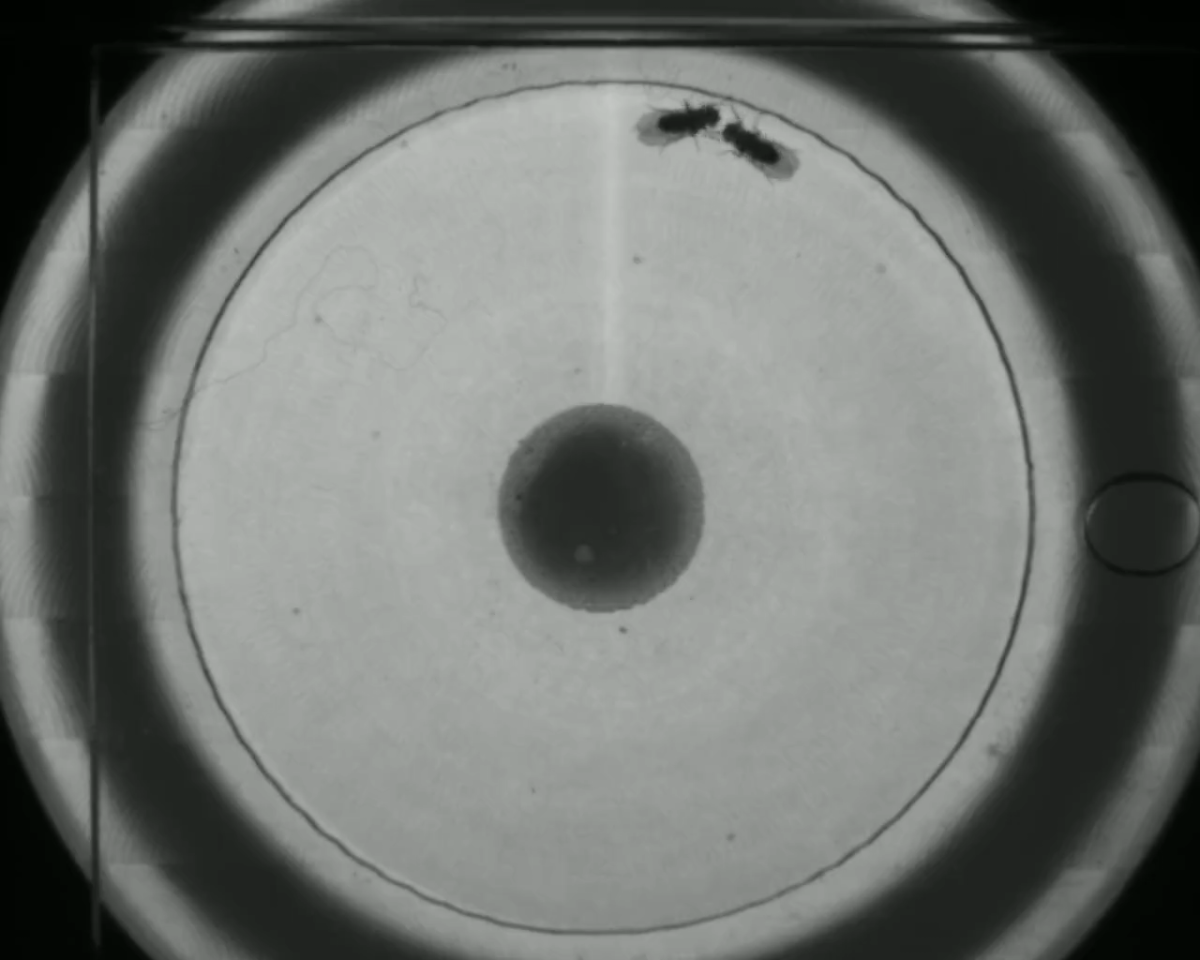
Researchers in the Yapici Lab found that the aggression of socially isolated fruit flies was significantly reduced after the flies consumed the psychedelic 2,5-dimethoxy-4-iodoamphetamine – commonly known as DOI.
Sophie Gustin ’25, who conducted the experiments as part of her honors thesis project, developed a system to dispense a microliter of 2,5-dimethoxy-4-iodoamphetamine – commonly known as DOI – to the flies using calibrated glass capillaries, thereby precisely measuring how much DOI the flies consumed. The researchers then used machine-learning algorithms to quantify the drug effects on fly behavior.
“The research in mammals suggests that these drugs might impact social behaviors, especially social bonding and connectivity,” Yapici said. “We knew that when you socially isolate Drosophila males, they become more aggressive. They fight in different ways, like they kind of kick each other, and they box.”
The team found that the aggression of socially isolated flies was significantly reduced after the flies consumed the psychedelic. The researchers also examined genetic mutations in flies and discovered that the serotonin 2A receptor that psychedelics target in mammals appears to be responsible for the drug effects in flies as well.
“It’s exciting to demonstrate psychedelics have effects on insects – and Drosophila, especially – which opens up ways for us to test them on large-scale genetic screens and to identify novel molecular targets for their actions, which might inform mammalian research in the future,” Yapici said.
Eliminating the ‘woo’ factor
While hand-feeding psychedelics to fruit flies can be arduous, navigating the policy challenges for studying these drugs has been equally difficult.
In 1970, psychedelics were designated a Schedule I controlled substance, which meant there were a raft of regulatory hurdles and the federal government would only fund research that studied the drugs’ harmful effects, despite recent clinical trials showing that the drugs have beneficial effects for treating psychiatric disorders.
Then in April, the Trump administration issued an executive order to consider reclassifying psychedelics – a huge positive impact for the science, according to Schaffer.

“It makes it easier for researchers to get access to them, because it’s this lower-tier license,” Schaffer said. “It makes it easier for manufacturers to produce these drugs to be sold in the research market. And it opens the door for the National Institutes of Health or other federal funding agencies to issue calls for proposals or fund grants that are looking for medicinal or other kind of positive benefits of these drugs.”
The change is also likely to attract new researchers with new techniques and new ideas. This makes it an exciting time to be working in psychedelics research, Schaffer said, although he is wary of a certain “woo factor” that has emerged in tandem with psychedelics’ mainstream acceptance.
“This sort of resurgence was primarily driven by people reporting great clinical outcomes: soldiers with PTSD, folks with intractable depression and OCD,” Schaffer said. “That has brought a lot of ‘woo’ into the picture. You know, ‘psychedelics are the cure for everything.’ I think that can make it difficult to navigate the field as a serious scientist when there’s a lot of this kind of woo factor coming in.”
Schaffer’s own work on psychedelics, in collaboration with Kwan and Amy Kuceyeski, a professor of mathematics in neuroscience and radiology at Weill Cornell Medicine, has examined the way psilocybin impacts neurovascular coupling in the visual cortex of mice. This coupling – whereby blood vessels dilate and constrict to route more blood flow to the part of the brain where neurons are more active – is important because one of the primary ways to map how neural activity responds to psychedelics is Functional Magnetic Resonance Imaging (fMRI). The imaging method tracks what is called the BOLD effect, i.e., blood oxygen level dependent changes in the MRI signal, rather than measuring neural activity directly.
By establishing that the relationship between neural activity and blood flow is likely altered by the drug itself, the team’s findings will help future researchers more accurately assess psilocybin’s effects on the brain.
Meanwhile, the impact of psychedelic research could soon expand beyond the realm of mood disorders.
Kuceyeski is currently collaborating with researchers at Johns Hopkins University on a clinical trial to see how the drug affects people who experienced chronic motor impairments after stroke.
“The idea is you take psilocybin, you reopen this window of plasticity that allows your brain to make these changes, and then you have this intensive sort of therapy that will hopefully help reconnect and establish those pathways that might have been damaged during your stroke,” Kuceyeski said. “We’re doing the brain imaging before and after the therapy to try and see if there are changes that correlate with people’s recovery of motor function. I don’t want to say anything conclusive yet, as the study is still ongoing, but the results look encouraging.”
A 20-year head start
To get a sense of where psychedelic research is heading, it’s instructive to look to its psychoactive cousin, ketamine.
Ketamine is a synthetic molecule that was originally used an anesthetic agent – often for children and in veterinary medicine – beginning in the late ’60s. It was initially studied, at a much smaller dosage, as an antidepressant in the ’90s. One of ketamine’s virtues is that, unlike other antidepressants, it works rapidly after a single dose, which makes it ideal for experimentation and dissecting its mechanics.
“Our goal was more to use ketamine as a probe to kind of drive these switches in the brain, and then understand how that works,” said Dr. Conor Liston, the Robert Michels, M.D. Professor of Psychiatry in the Department of Psychiatry and a professor of neuroscience in the Feil Family Brain and Mind Research Institute at Weill Cornell Medicine. Liston researches the molecular and cellular mechanisms that control mood state switches, with the aim of developing new tools for diagnosis and treatment of depression.
Ketamine is already FDA-approved for treating depression and has been studied for more than two decades in that context. That makes it something of a bellwether for psychedelic studies.
“Our understanding of ketamine and its antidepressant properties is much more well-developed. The psilocybin field is catching up rapidly, I think, but there have been a host of controlled clinical trials showing that ketamine works as an antidepressant, starting in the late ’90s, and leading to FDA approval for a version of ketamine, S-ketamine, in 2019,” Liston said. “So it was a good 20-plus years to get there, and numerous large-scale, rigorous clinical trials.”
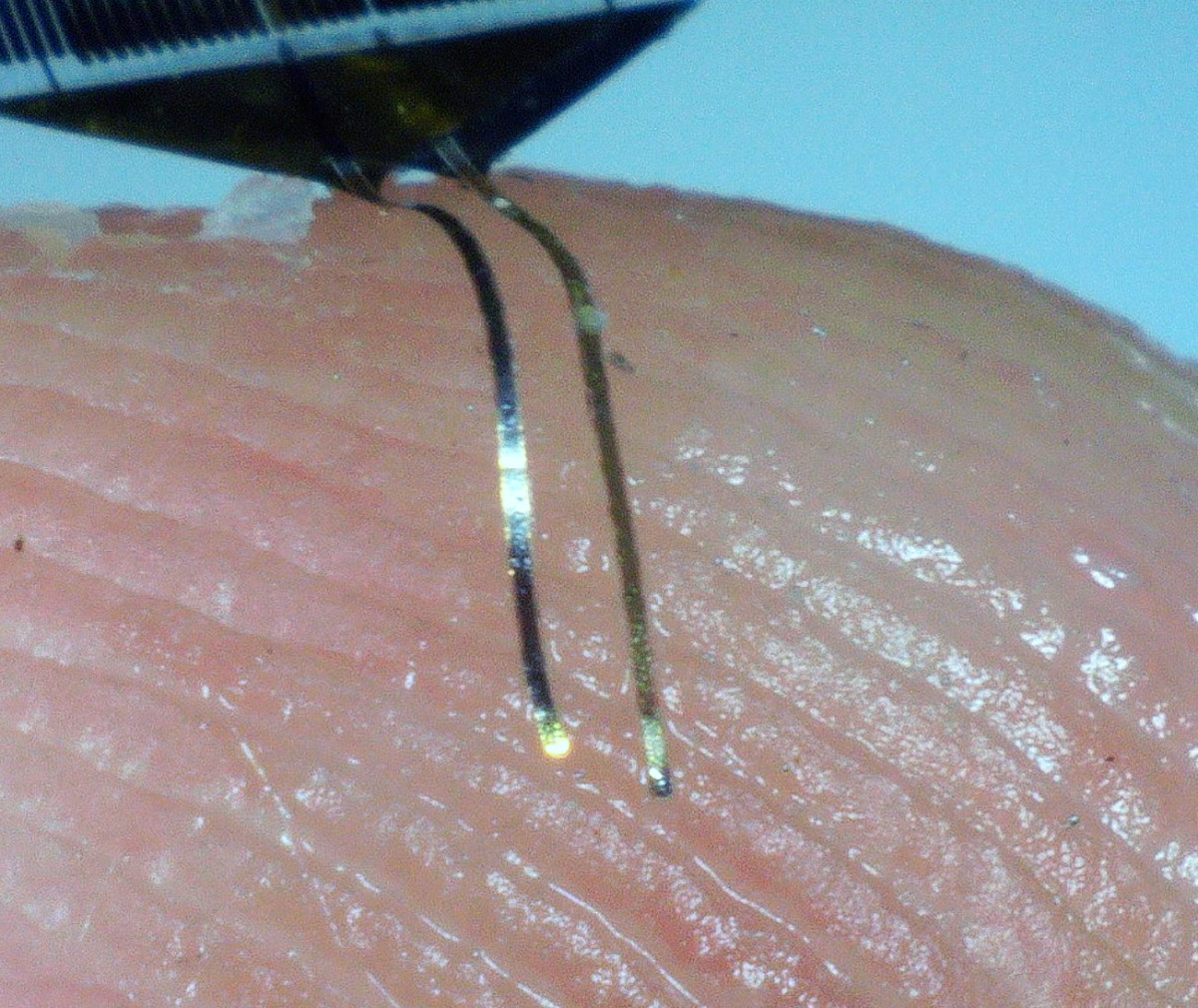
Researchers designed and fabricated minimally invasive electrodes – pictured here on a human thumb, for scale – that can stick to the brain and record the same several hundred neurons for up to a year.
Still, Liston is excited about the current state of psychedelic research and sees it moving in the right direction – with lessons from ketamine’s success.
“The ketamine story just underscores the need for, and the benefits of, really careful clinical investigation built up over years that ensures the safe rollout of an effective treatment,” said Liston, whose research has shown how ketamine selectively restores synapses that are lost during chronic stress, and how a special cocktail of drugs can target a receptor that turns off stress-related dysfunction and induces antidepressant-like behavioral effects. “The psychedelic field will really benefit from the same sort of careful scientific approach and not rushing things.”
Just shooting in the dark
Looking ahead, Schaffer agrees that understanding how drugs like psilocybin function will be critical if they are ever to reach the commercial market.
“There’s no way that psilocybin is going to be the end of the drug development pathway, you know, using serotonin receptor antagonists to treat mental health conditions,” he said. “There’s going to be derivatives of these, and folks are going to ask, can you get rid of the psychedelic experience but maintain the therapeutic benefit? Can you extend the therapeutic benefit longer? Can you avoid this or that side effect? None of those questions are answerable unless we understand the mechanisms. Otherwise, you’re just shooting in the dark.
“And remember how these drugs emerged,” he added. “Basically, we found them because of thousand-year histories of people randomly trying stuff. Like, ‘Oh, this one kind of felt good.’ So there’s already been a lot of that, just trying blindly. The path to finding something that’s going to work even better will be through deep, mechanistic understanding. I think that’s the way these are likely to progress into drugs that are truly effective.”
Media Contact
Get Cornell news delivered right to your inbox.
Subscribe