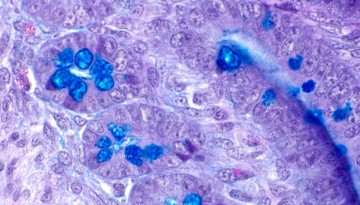
Metal oxide nanoparticles – commonly used as food coloring and anti-caking agents in commercial ingredients – may damage parts of the human intestine, say Cornell and Binghamton University scientists.
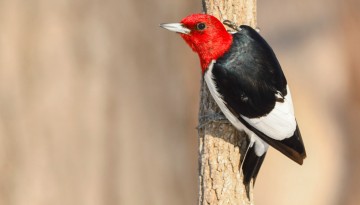
The 26th annual Great Backyard Bird Count – in which bird and nature lovers around the world unite in an effort to tally as many species as possible over four days – begins Feb. 17 and runs through Feb. 20.
Pascal “Toni” Oltenacu, a professor emeritus of animal science who used mathematical modeling to predict disease, longevity and reproduction in dairy cattle, died Dec. 10, 2022 in Gainesville, Florida. He was 84.
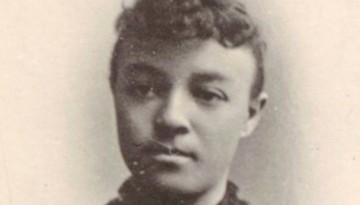
After graduating with a degree in botany in 1890, Jane Eleanor Datcher taught chemistry at the first – and best – public high school in the U.S. for Black youth and helped organize regional and national networks for Black women.
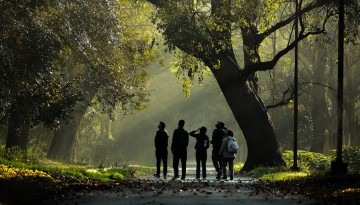
A new study from the Cornell Lab of Ornithology found which kind of nature experiences were associated with a greater sense of well-being during the COVID pandemic.
Dyson professor Suzanne Shu and colleagues found that considering one’s “future self” played a key role in how people decide when to start collecting monthly Social Security benefits. Societal norms regarding retirement, however, do not.
From new approaches for tendon injury treatment to biomass-based construction materials, Cornell Engineering’s inaugural Sprout Awards are funding unique research projects with the potential to grow partnerships across Cornell.
Founded in 1982 and celebrating 40 years, Cornell Academics and Professors Emeriti represents a large community of retired academics and faculty that continue to make significant contributions to university life.