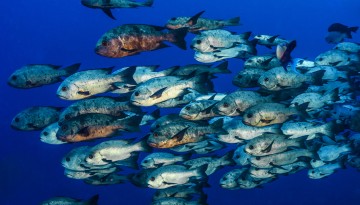
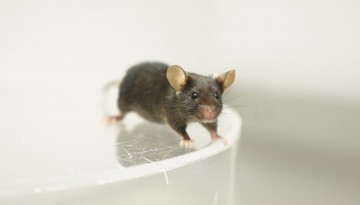
Fish can adjust their sensitivity to the actions of others – such as fleeing due to a false alarm – in order to reduce the risk of responding to misinformation, according to a new study.
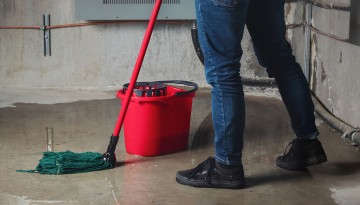
In flood-prone New York, non-white homeowners are more likely to take active measures – like protecting a furnace or installing a sump pump – to prepare for deluge, says Cornell research.
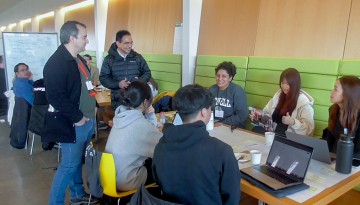
The Cornell Institute for Digital Agriculture Hackathon, an all-weekend event, drew 150 undergraduate and graduate students from most of Cornell’s schools and colleges to the College of Veterinary Medicine.
Wilmot “Bill” Irish, an agricultural engineer and professor emeritus, who specialized in farm structures and mechanization in the dairy and poultry industries, died Nov. 22, 2022, in Shelburne, Vermont. He was 94.
Ten Cornell postdoctoral researchers who plan to harness the power of artificial intelligence (AI) in areas like materials discovery, physics, biological sciences and sustainability sciences have been named Eric and Wendy Schmidt AI in Science Postdoctoral Fellows, a Schmidt Futures program.
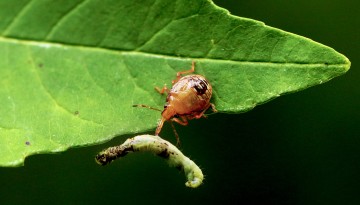
Moderate levels of artificial light at night – like the fixture illuminating your backyard – bring more caterpillar predators and reduce the chance that these lepidoptera larvae grow up to become moths.
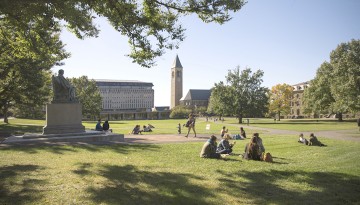
Students from Cornell and other universities are invited to enroll now for Cornell’s Summer Session, which will feature on-campus, online and off-campus courses. Students can earn up to 15 credits taking regular Cornell courses.